

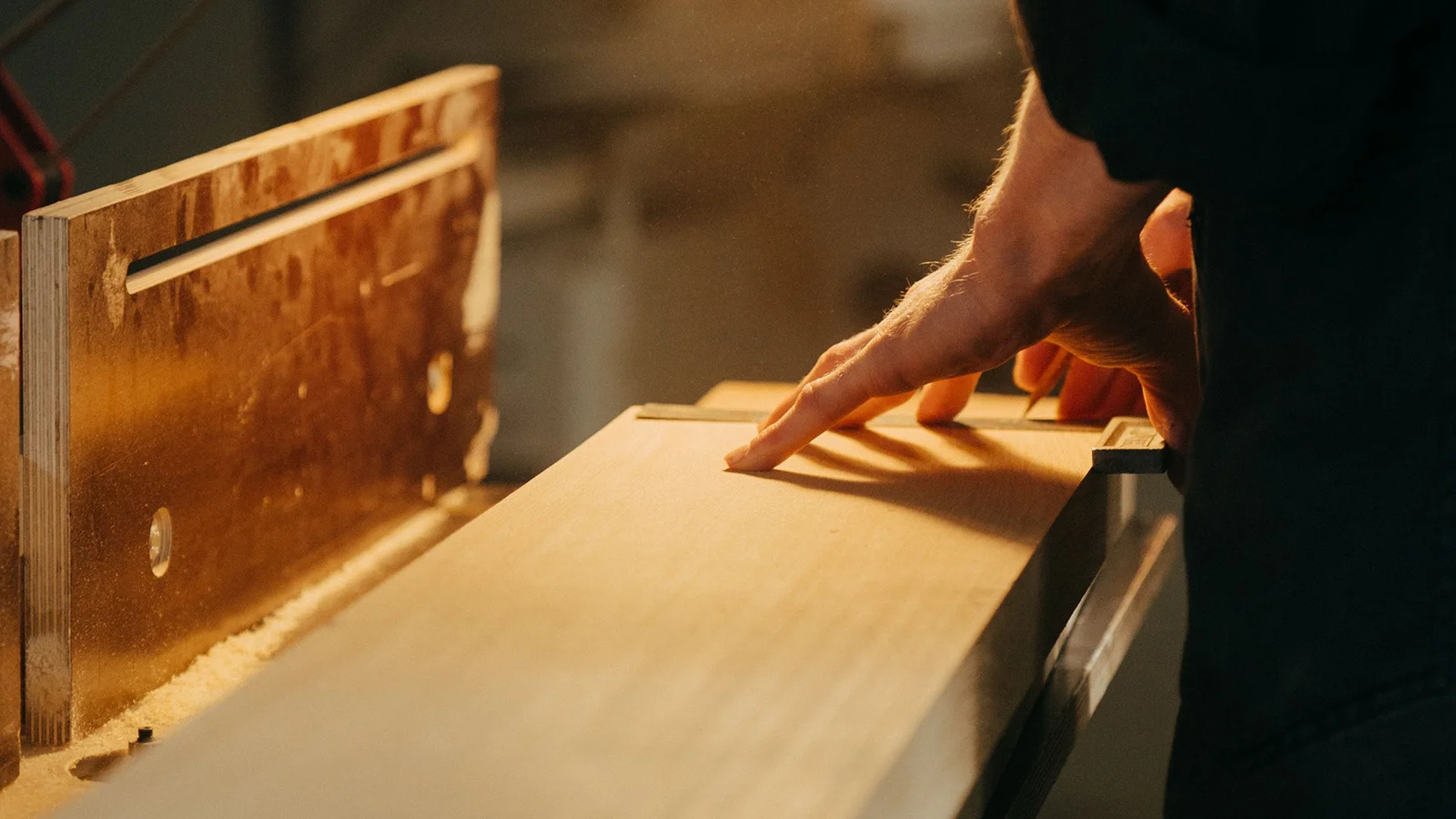
Dry the timber.
Keep the grade.
Leave the press alone.
A kiln is not a boiler load — it is a moisture problem. Wood arrives with 50–100 % water on dry weight, and that water has to leave before the timber can be glued, finished or shipped. A conventional kiln heats the stack and vents the humid air, throwing away the heat και the latent heat in the water. A dehumidifying heat pump closes the loop: it condenses the water out, recovers its latent heat and reheats the air gently at 40–80 °C. Drying cost is a small share of the bill; the grade is the real prize. Panel presses stay on steam.
Set the drying temperature. The series follows.
Choose the temperature your kiln or hot-water loop actually holds — not the press schedule — and the panel returns the matching series, a realistic COP at that lift, the form of heat or dehumidification delivered, and whether a boiler still has a job. Drag the slider or use the arrow keys. Almost every timber duty sits between 30 °C and 95 °C. The scale runs to 150 °C because the range is real — and because board pressing and high-temperature veneer drying belong to a different machine entirely.
Kiln air for oak, maple, walnut and furniture components — 30 / 60 °C
Premium hardwoods need a gentle curve: 40–65 °C with controlled relative humidity so the core and the surface dry at close rates. The evaporator condenses water out of the recirculating air and the condenser puts the recovered latent heat back, with compressor heat topping up. Lower temperature and a progressive dehumidification curve are what protect the grade — the energy saving comes with them, not instead of them.
The site is a moisture system, not a heat system
A sawmill or furniture factory does not have one heat demand. It has a kiln that must remove tonnes of water slowly enough to protect the grain, a board plant that dries fibre or particles to a tight moisture content before forming, a finishing area with humidity control, and utility loops that need hot water. The heat pump's real input is not fuel — it is the water leaving the wood. Condense it and the latent heat comes back with it.
Kiln drying
Hardwoods 40–65 °C, softwoods up to 80 °C, closed-loop dehumidification. Drying is often only 5–8 % of processing cost but decides the large majority of quality defects.
Veneer & engineered wood
Blocks heated to about 93 °C before peeling; veneer and strands conditioned to 2–6 % moisture before gluing. Uniformity matters more than speed.
Fibre & particle drying
Board-plant fibre flash-dried to 8–10 % MC, particles to 2–8 %. An in-range hot-water or dehumidifying duty — and the last step before the press.
Steam & hot-oil duties
Refiner digestion 170–190 °C, hot presses 140–220 °C, veneer dryers 150–200 °C. These run on steam or thermal oil; they are the boundary, not the opportunity.
Twenty-one stages, band by band
The selector above answers one question — what series does this temperature need. This index answers the other: which real timber, furniture and board steps sit in each band, what form of heat or moisture removal they want, and which machine serves them. Filter by band, or read the whole list. Presses and high-temperature veneer dryers appear as boundaries, not as heat-pump duties.
Inside the kiln: the water is the heat source
A conventional kiln heats the stack and vents moist air to keep the humidity from saturating — so it pays twice: once to evaporate the water, again to throw the heat away. A dehumidifying heat pump runs almost closed. Moist air passes over a cold evaporator, water condenses and drains, and the latent heat released there is picked up by the refrigeration circuit and returned at the condenser along with the compressor's own heat. The air goes back through the stack at a controlled temperature and humidity.
Where the heat stops — the press is not a kiln
The boundary in this industry is unusually sharp. Kiln drying and fibre conditioning sit at 40–110 °C, inside our range. Board pressing, refiner digestion and high-temperature veneer drying sit at 140–220 °C, with pressures up to 5 MPa and short, intense cure cycles. They are conduction and thermal-conversion duties on steam or thermal oil. A supplier who offers to replace a hot press with a heat pump has not read the press schedule.
Adjacent duties we also size
Sawmill & timber yard
Log-conditioning water, warm water for log washing and debarking, and heated storage to prevent fungal stain before the kiln. Low-grade and often continuous — an easy first heat-pump duty.
Furniture finishing
Dehumidified drying rooms, warm water for glue and finishing lines, and humidity-controlled curing space. Water-based coatings and low-temperature cure schedules can sit inside our range; high-temperature cure stays on the existing plant.
Board plant utilities
Fibre and particle drying ahead of forming, plus low-pressure steam and hot-water loops elsewhere on site. The press itself stays on steam — we size the upstream duty that decides whether the press can run at all.
Export & packaging
ISPM 15 heat-treatment programmes at a 56 °C core for 30 minutes, and conditioning chambers for pallets and packaging. A contained duty that fits a dehumidifying kiln well.
Six series, matched to the process step
Timber plants concentrate their in-range load between 30 °C and 110 °C, where efficiency is highest. The cards outlined in red follow the temperature band currently selected in the selector above — change the slider and the recommendation changes with it. The top two bands are shown for completeness; on a board plant those duties stay on steam or thermal oil.
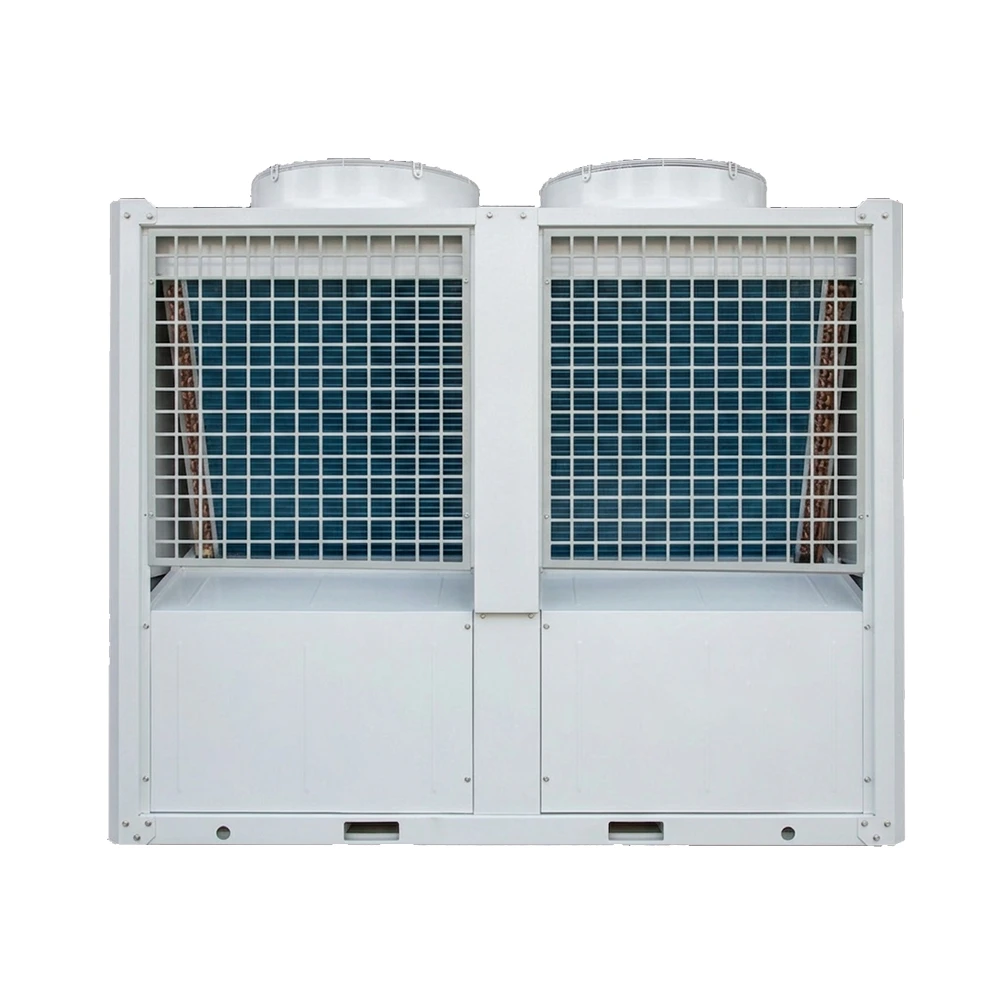
Kiln hot-water circuits, warm rooms and timber storage where no water-side source is available. The simplest first retrofit.
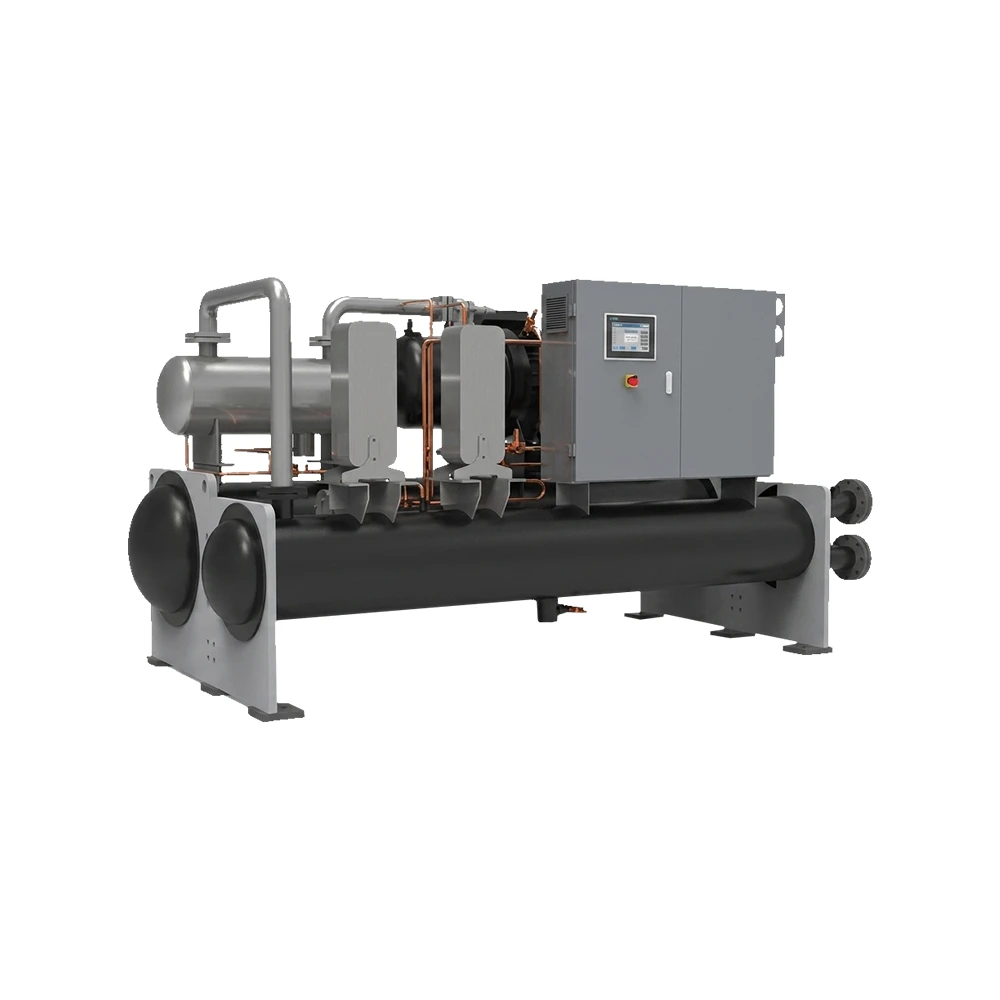
Multi-chamber kiln circuits and plant hot water from warm effluent, compressor heat and dryer exhaust — the site workhorse.

Veneer block heating, high-temperature wash and fibre or particle drying ahead of the board press.
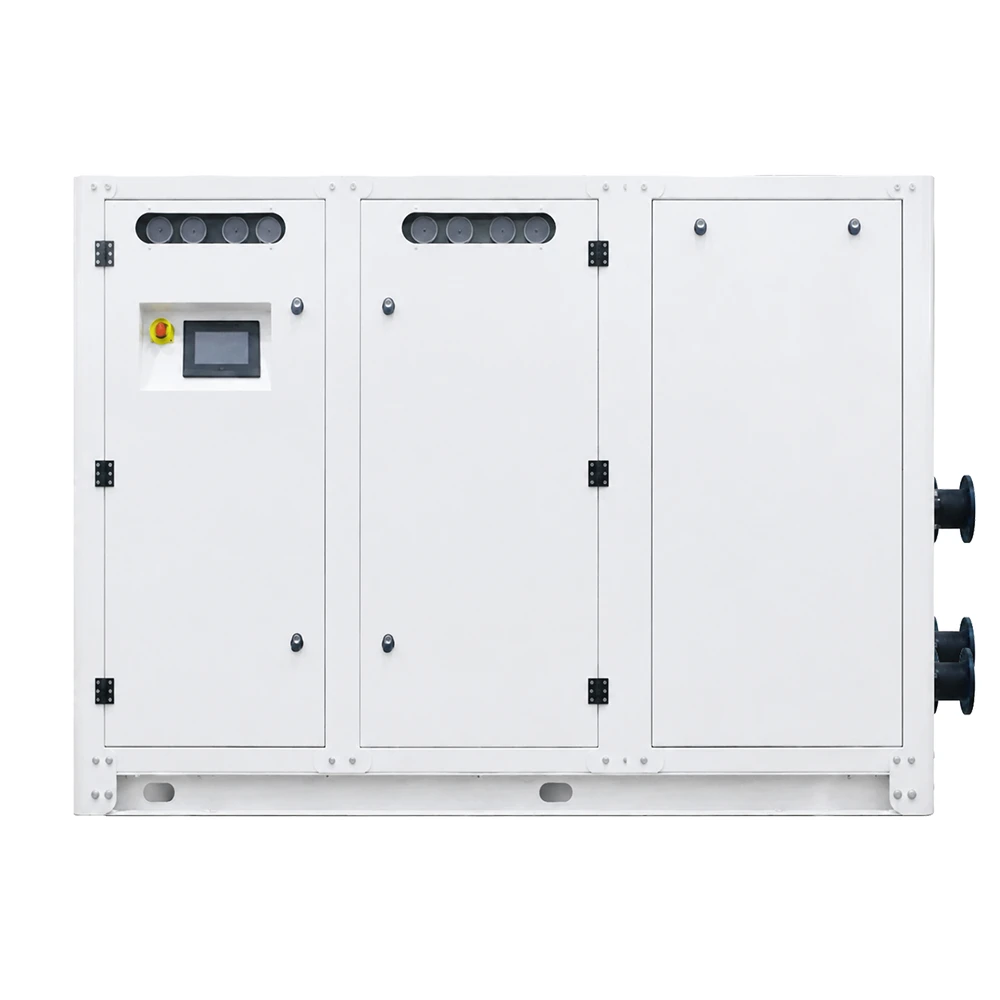
Low-pressure steam for plant utilities and drying where condensate returns. Not for a board hot press.
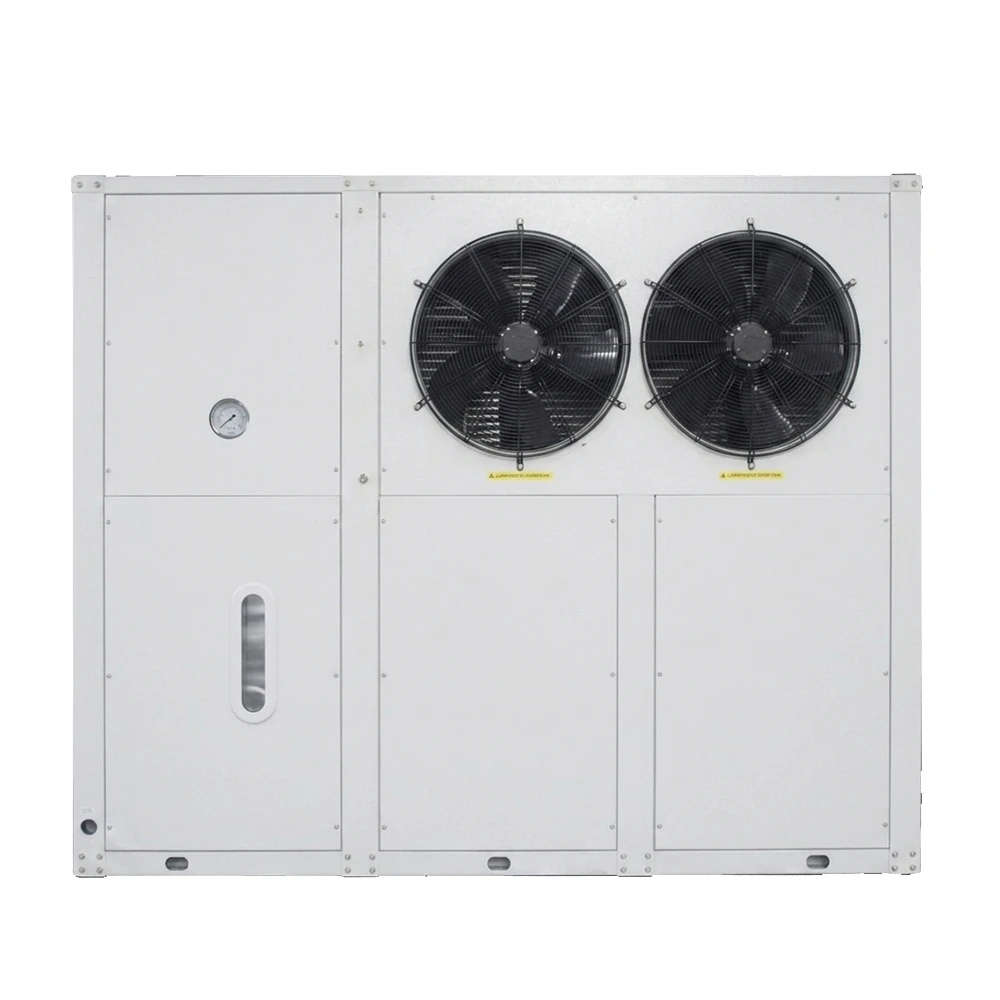
Sites with no usable water-side source that still need process steam. A utility machine, not a press machine.

The dehumidifying kiln machine: 30–85 °C controlled hot air with inverter drive and moisture removal built in.
Ten years of drying heat, priced on your operating year
Fuel price alone does not decide a timber project — the drying curve, the species, the water to remove and how many kiln charges a year do. A cabinet maker at 2,500 hours and a multi-chamber mill running 7,000 are entirely different investments at the same kW. Set seven numbers and the panel prices heat from a boiler and from a heat pump over ten years, including the capital the boiler option does not need.
All monetary outputs are in whatever currency you enter. This is a screening estimate, not a quotation — the exclusions are listed directly below.
Included: installed system cost and ten years of heat energy cost for both options at constant prices. Excluded, and both favour the heat pump: the latent heat recovered from the condensate, avoided fuel delivery and storage, flue-gas treatment, fire-risk control around a combustion kiln, carbon cost, and any electrification grant or tax credit. Excluded, and this works against it: chamber insulation upgrades, circulating fans and their controls, condensate drainage, revised drying-curve validation with the timber or coating supplier, and downtime during installation. Most importantly, this calculator prices heat; the larger value in timber is usually grade recovery — less checking, warping and discoloration. The three formulas match the ones used on our other industry pages: boiler heat cost = fuel ÷ efficiency, heat pump heat cost = electricity ÷ COP, break-even COP = electricity ÷ boiler heat cost.
Where a heat pump stops — and what to do instead
An application page without limits is a brochure. These are the five boundaries we hit most often in timber and furniture projects, stated before you ask.
| Boundary | Why | Correct solution |
|---|---|---|
| Board hot presses at 140–220 °C | Pressed at 2–5 MPa with short resin-cure cycles; heat crosses a platen by conduction, far above a heat pump's practical range | Keep steam or thermal oil on the press. Use the heat pump upstream on fibre and particle drying |
| Veneer dryers at 150–200 °C | High-temperature continuous drying for plywood and LVL; also above the commercial heat-pump ceiling | Retain the existing dryer. A heat pump can serve block heating and moisture conditioning before it |
| Refiner digester at 170–190 °C | Chips are steamed to soften lignin before defibration; a pressure and steam duty, not a low-grade heat lift | Steam stays. Recover low-grade heat elsewhere on the board line instead |
| Drying rate cannot be separated from quality | Fast surface drying against a wet core creates stress above the wood's shear strength — checking, honeycombing and warping follow | Set the species-specific curve and accepted defect rate first. Choose the machine that can hold it, not the one with the biggest kW |
| Sawdust, resin and condensate fouling | Dust and extractive-laden air foul evaporator and condenser coils; resin mist from board lines adds to the load | Adequate filtration and washable exchangers, accessible coil layout and a cleaning schedule written into the maintenance plan |
Standards and sign-off
Depending on where the machine lands — a kiln, an export-treatment area or a board line — a different set of rules applies. These are the ones that come up in timber project reviews.
Product and process compliance
ISPM 15 for wood packaging heat treatment (56 °C core for 30 minutes, with the official conformity mark); FSC / PEFC chain of custody where certified fibre is specified; EPA TSCA Title VI και CARB formaldehyde-emission rules for composite panels; EN 717 και EN 13986 for panel emissions and conformity. Heat-treatment schedules must be recorded and verifiable.
Plant and equipment safety
NFPA 86 for ovens and NFPA 654 for combustible-dust hazards where sawdust and sanding dust are present; ATEX 2014/34/EU και IECEx where combustible-dust zones are classified; PED 2014/68/EU και ASME VIII for pressure equipment; F-Gas 517/2014 and the Kigali low-GWP phase-down. Kiln doors and interlocks come under the local machinery-safety rules.
What we need to size your system
No site visit is needed for a first-pass answer. Five pieces of information get you an indicative design, a water-removal figure and a payback estimate.
Species, thickness and moisture content
Starting and target MC, board thickness, sticker spacing and the drying schedule you already run. These decide the temperature and humidity curve before any machine is chosen.
Water to remove and kiln hours
Charge volume, number of charges per year and the hours the kiln is actually heating. Water mass is the real duty: it sets both the evaporator size and the energy bill.
Air and source conditions
Kiln supply and return temperature and RH, fresh-air make-up, and any low-grade source elsewhere on site — warm effluent, compressor heat or dryer exhaust.
Current cost of heat and quality losses
Fuel or steam tariff, heater efficiency, electricity tariff, and what checking, warping or discoloration costs you in downgrade each year. The second number often decides the project.
Chamber and site constraints
Insulation quality, air circulation and fan arrangement, space for the unit and condensate drainage, and which programme changes need approval from the timber or coating supplier.
Water (kg) ≈ timber dry mass (kg) × (initial MC − final MC) ÷ 100
Electricity (kWh) ≈ water removed (kg) ÷ SMER, with SMER ≈ 2.5 kg/kWh for a heat-pump kiln
Example: 100 tonnes of dry timber dried from 60 % to 12 % MC → 100,000 × 48 ÷ 100 = 48,000 kg of water. At 2.5 kg/kWh that is about 19,200 kWh. At roughly 1.05 kWh per kg for direct electric or steam drying the same job needs about 50,400 kWh. Confirm SMER at your own species and target MC — a figure quoted on thin softwood will not transfer to thick hardwood.
FAQ
What temperature does a heat pump timber kiln run at?
How is a heat pump kiln different from a steam or fuel-fired kiln?
Which timber and furniture duties can a heat pump serve?
Can a heat pump heat a wood panel hot press?
Does drying temperature affect timber quality more than energy cost?
Can a heat pump kiln meet ISPM 15 heat treatment?
Send us three numbers. Get a real answer.
Your species and target moisture content, the water you need to remove per charge, and what you pay for heat today. That is enough for an indicative water-removal rate, a recommended series and a payback range — with the press boundary stated, not hidden.
Sources and basis
- Dehumidification kiln operating range 40–80 °C by species and target moisture content; closed-loop moisture condensation with latent-heat recovery; applications across sawn timber, furniture components, veneer, engineered wood and flooring: ELASN, Dehumidification Kiln: How It Works and Why It's Reshaping Wood Drying (2026).
- Industrial kiln control at 40–80 °C dry-bulb with 5–15 °C wet-bulb depression; heat-pump kiln SMER up to 2.5 kg water/kWh; drying cost 5–8 % of processing cost but decisive for most quality defects; furniture-grade final moisture content around 8 ±2 %: Baidu B2B encyclopedia, Industrial wood drying kiln (2025).
- Heat-pump timber drying consuming about 0.65 kWh per kg of water evaporated versus 1.05 kWh for electric or steam heating; staged preheat 20–45 °C, dehumidification above 55 °C and final drying 60–75 °C: 振科机械 and 科创达, wood drying process guidance (2025).
- Hardwoods (oak, maple, walnut, cherry) dried at 40–65 °C to preserve grain and structure; softwood structural lumber to below 19 % or 15 % MC; veneer and engineered wood conditioned to 2–6 % MC before gluing; ISPM 15 core 56 °C for 30 minutes; 60–80 % lower running energy than direct-vent kilns: Sichuan Jiada Technology Group, Industrial Dryer for Industrial Timber and Wood Drying.
- Furniture factory project using 45–65 °C control with progressive dehumidification — discoloration reported at zero, warping near 3 %, daily throughput up about 50 %, 10 units on a continuous tunnel line: 科信新能源, Ganzhou furniture-factory case report (2026).
- MDF hot press 160–200 °C at 2–3.5 MPa with 180 °C typical; chip steaming 105 °C for 40 min; fibre dried to about 13 % before forming: patent CN100513104C, single-daylight MDF thin-panel hot-press method.
- MDF digester 170–190 °C, fibre dried to 8–10 % MC, continuous hot press 180–220 °C at 25–40 bar: Woodexy, How MDF is Manufactured: From Log to Panel in 12 Steps.
- Particleboard press 149–182 °C (US EPA plants) and 140–220 °C at 2–3 MPa in a 2021 review; plywood press 107–165 °C; veneer dried at 150–200 °C; veneer blocks heated to about 93 °C before peeling: Moldart India, How particleboard, MDF and plywood are made (sources verified November 2026).
- Six HETAPRO series from 30–95 °C hot water and 110–150 °C steam: HETAPRO product specifications. Figures are indicative engineering ranges, not contractual performance data.