

Market Context — Why Cold-Climate Heat Pumps Matter in Europe (2025–2030)
Europe’s heating market is undergoing fast technical and regulatory change. New F-gas rules, tighter energy-performance expectations, and a rising need for systems that can deliver high flow temperatures make the selection problem for distributors and installers more complex but also more opportunity-driven. For purchasing teams the question is no longer only “which model is cheapest” — it is “which system will deliver required capacity and temperatures reliably at -15°C and below, comply with incoming regulation, and give predictable lifetime cost and serviceability.”
Shift Toward R290 Due to F-Gas Phase-Out
Policy pushes (revised EU F-gas regulation and associated bans/limits) strongly favour low-GWP refrigerants and create commercial incentives to adopt natural refrigerants such as R290 (propane). From 2025 onward the EU regulatory landscape increasingly restricts high-GWP HFCs; this is driving manufacturers and B2B buyers to consider R290 at scale for heat-pump product lines. Choosing R290 models now reduces regulatory risk and aligns product portfolios with the near-term phase-down trajectory.
Commercial Demands for Higher Flow Temperatures
Many retrofit projects in Europe still rely on radiator systems or require domestic hot water at elevated temperatures. For a growing number of projects — renovations, multi-family retrofits and some light-commercial uses — design temperatures of 65–80°C are required, which narrows the field to heat pumps engineered for high-temperature performance. Models that can maintain capacity at high flow temperatures while operating in low ambient conditions are commercially valuable in cold regions.
Why -20°C to -30°C Performance Is Now Required
Climate zoning and buyer expectations have shifted: installers must now design systems for reliable operation down to -20°C or lower in parts of Scandinavia, the Baltics, Alpine regions and Eastern Europe. This requirement changes the way we size, select defrost strategies, and assess seasonal performance (SCOP) — not just the nominal kW number on the datasheet.
Technical Requirements for Heating in Cold Climates
Selecting the right heat pump in cold regions hinges on understanding a handful of technical metrics and how they interact under low ambient loads.
COP, SCOP, and Low-Ambient Efficiency
Coefficient of Performance (COP) at a given ambient and flow temperature tells you instantaneous efficiency; seasonal COP or SCOP gives you a more realistic annual picture. In cold climates, the curve of COP vs ambient temperature is crucial: a unit with a shallower decline in COP as ambient drops will deliver better fuel-cost performance across winter months. Always check manufacturer curves at -10°C, -15°C, and -20°C rather than relying solely on 7°C or 35°C test points.
Hot Water Demand up to 75–80°C
If the site requires water up to 75–80°C (for older radiators, DHW, or hybrid systems), prioritize heat pumps explicitly rated for those flow temperatures. Systems that achieve these temperatures typically do so by staging compressors, using cascade or booster strategies, or accepting lower COP at the highest flow points — so you must balance temperature capability against seasonal efficiency and fuel cost. (Heatix R290 series claims high-temperature capability; use system curves to confirm when comparing models.)
Understanding Refrigerants: R290 vs R32 Efficiency Curve
R290 (propane) and R32 have different thermodynamic characteristics that affect low-ambient performance. R290 generally offers lower GWP (≈3) and can deliver higher heating efficiency at low temperatures in practical system designs; R32 remains a lower-cost alternative with good performance in moderate climates. For deep-cold installations, many manufacturers now prefer R290 because of both regulatory alignment and the low-temperature efficiency edge. However, R290 is flammable, so equipment design, safety certification and installation practices must comply with relevant standards.
Single-Fan vs Dual-Fan: Airflow, Noise, and Capacity Stability
Single-fan monoblock heat pumps are compact and simpler; dual-fan designs (like Heatix Plus) increase heat-exchanger area and airflow, which improves capacity stability and defrost behaviour at extreme lows. Dual-fan units also offer redundancy — one fan can continue operation if the other fails — and typically support larger nominal capacities for multi-unit or light-commercial applications.
Monoblock vs Split: Which Performs Better in Harsh Winters?
Monoblock systems house all refrigeration components outdoors and only connect hydronics on the water side — fewer leak points for refrigerant and simpler commissioning. In extreme cold they are often preferred for reliability and ease of service. Split systems can offer quieter indoor operation and lower outdoor footprint but require skilled refrigerant handling and tight refrigerant-circuit commissioning. For installers operating at scale in remote cold regions, monoblock heat pumps reduce onsite refrigerant work and often simplify logistics.
Product-by-Product Technical Breakdown
Below is a practical technical summary of the product families you specified (capacity and high-level features are derived from your product inputs). Use these summaries as selection starting points — always validate with manufacturer datasheets and local test curves.
Heatix R290 Monoblock (7–21 kW)
Cold Rural Houses with Radiators → Heatix R290
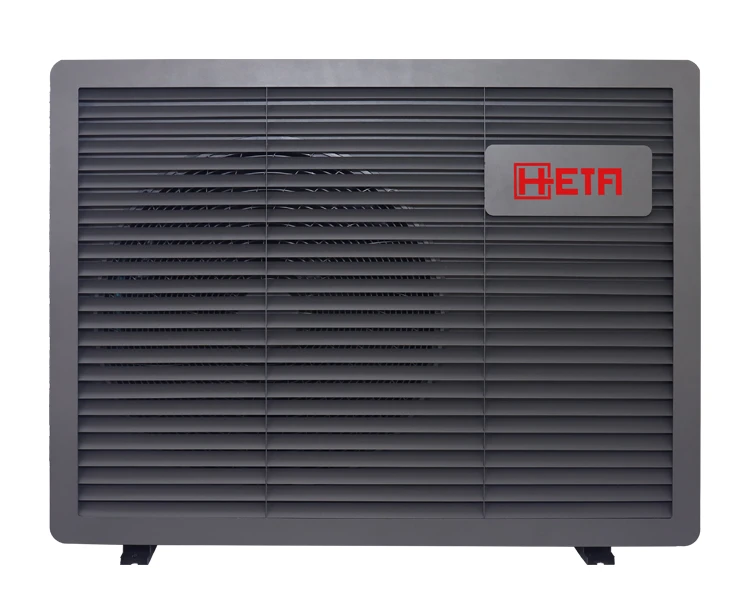
Heatix R290 monoblock heat pumps are positioned for radiator-heavy retrofits where high flow temperatures are required and refrigerant handling should be minimized.
Operating Range, Flow Temp (up to 80°C), and Defrost Strategy
Designed for cold climates, the Heatix R290 monoblock targets applications that require high flow temperatures (up to 80°C). Expect staged inverter control and adaptive defrost logic: these features preserve capacity during repetitive frost cycles common in cold, humid climates. Confirm manufacturer COP curves at -10°C and -15°C for your region.
Applications: Villas, rural homes, renovations with radiators
Best suited for single-family houses or small multi-family with radiator systems that demand high flow temperatures. Monoblock architecture reduces onsite refrigerant handling — attractive for installers in remote locations.
Competitive Advantages for Distributors
- R290 refrigerant: low GWP and regulatory alignment.
- Broad capacity band (7–21 kW) covers most residential and light-commercial needs.
- Easier commissioning vs split systems (water-side only connection).
Heatix Plus R290 Monoblock (18–21 kW, Dual-Fan)
Large Villas in Northern Europe → Heatix Plus R290
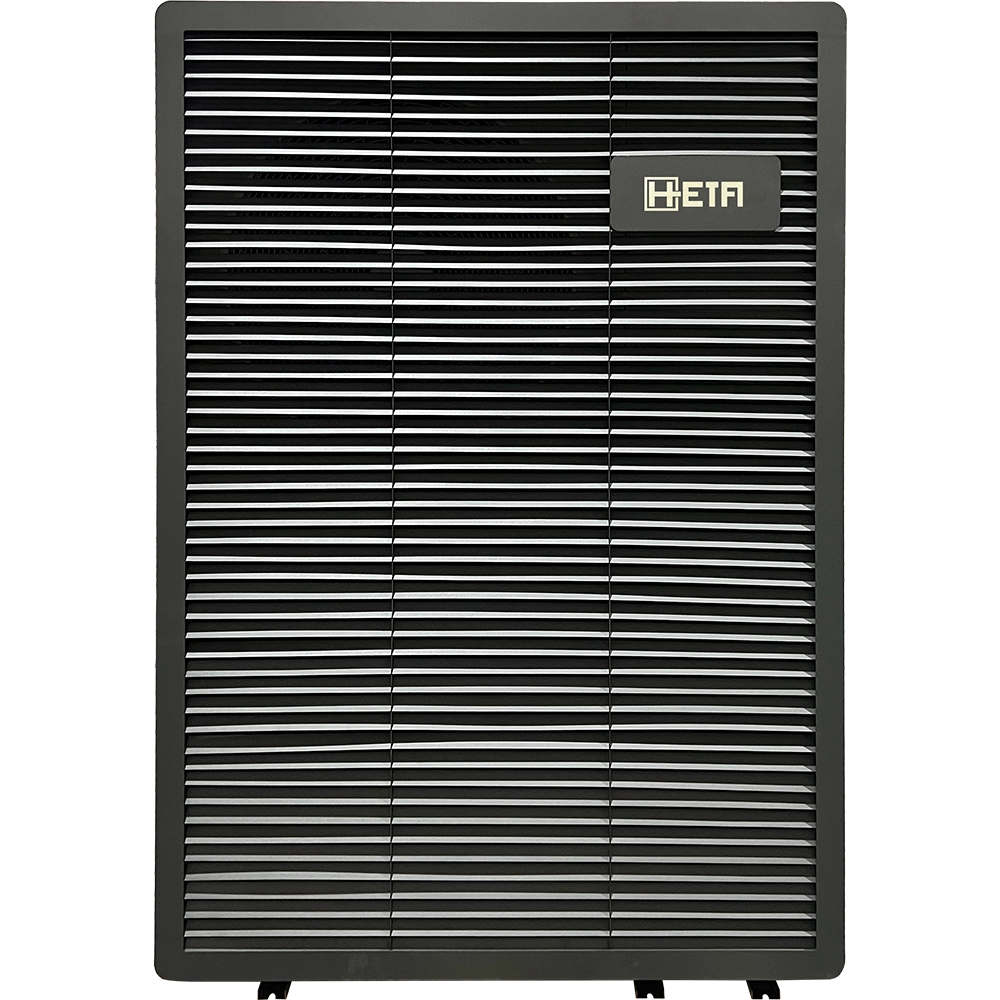
Large capacity and dual-fan design deliver the stability and headroom needed for bigger residences or properties with higher heat loads.
Large-Capacity Output for Cold Regions
Dual-fan design improves heat exchange at very low ambient temps and supports stable flow at higher setpoints (up to ~80°C). The upper capacities (18–21 kW) target larger homes, small apartment blocks or light-commercial spaces.
Light-Commercial Usage (apartments, small businesses)
When multiple dwelling units share a single outdoor unit or light commercial spaces require continuous service, the Heatix Plus provides the capacity headroom and redundancy (dual fan) valuable for B2B customers.
Commercial Pitch Points & ROI for B2B Buyers
- Reduced downtime and better cold-weather resilience compared with single-fan units.
- Higher installed capacity reduces the number of units needed per project, simplifying logistics and maintenance overhead.
Thermax R32 Monoblock (7–16 kW)
Budget Installations → Thermax R32 Monoblock
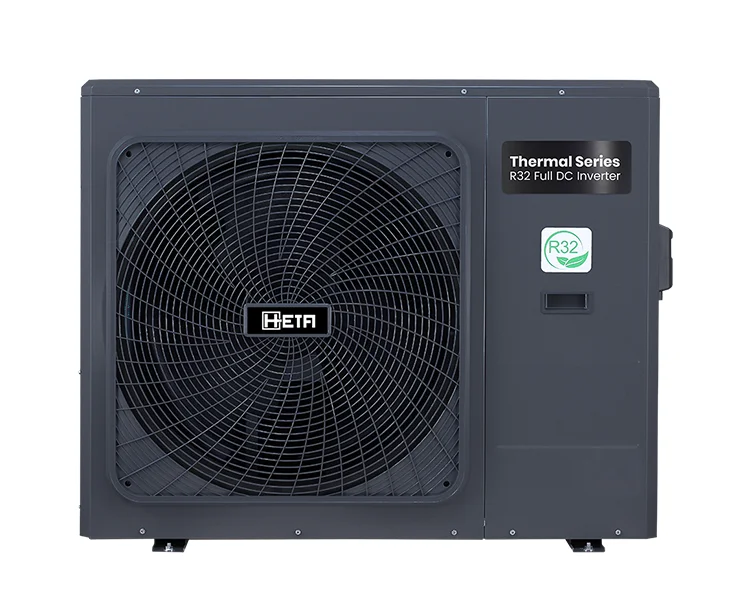
For new builds with underfloor heating or well-insulated homes in milder regions, Thermax R32 offers competitive CAPEX and acceptable winter performance.
Budget Option for Mild-to-Cool European Regions
Thermax R32 models are cost-effective for regions where winter minima are less extreme. R32 remains easier to service (non-flammable class A2L vs R290 flammability considerations) and typically comes at a lower purchase price.
When R32 Still Makes Sense for Installers
Choose R32 for new builds with under-floor heating or well-insulated homes where required ΔT is moderate and extreme ambient cold is rare. For budget-sensitive projects that can tolerate slightly lower efficiency at deep cold, R32 is a rational choice.
Competitive Advantages for Cost-Sensitive Projects
Lower initial capital and simpler on-site safety restrictions (compared to hydrocarbons) can reduce total installation time and cost.
Thermax R32 Split System (5–16 kW)
Apartments with Indoor Piping Routes → Thermax R32 Split
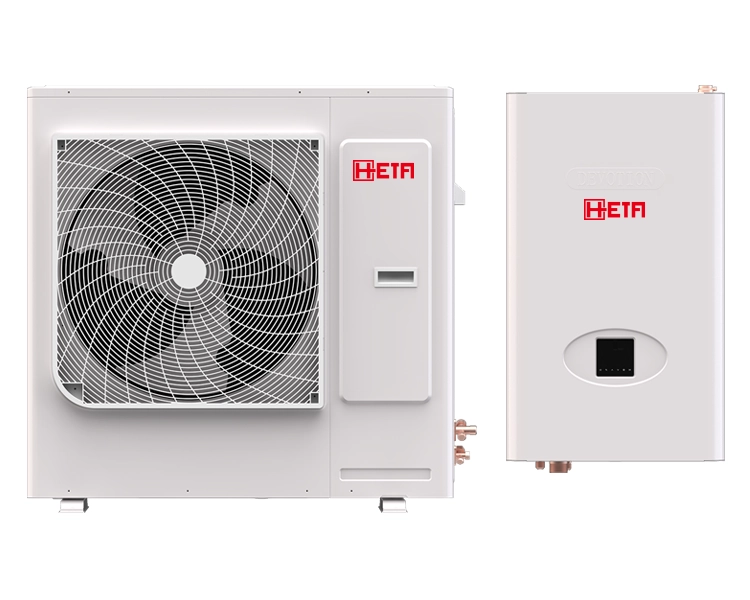
Split systems simplify indoor integration and are often preferred in constrained urban retrofits where hydronic renovation space exists indoors.
Indoor Unit Benefits in Harsh Frost Conditions
Split systems allow indoor placement of sensitive components, improving protection from frost and vandalism. Indoor hydraulics can be integrated with existing plant rooms or DHW cylinders more cleanly.
Installer-Friendly Advantages
Indoor unit access simplifies electrical and hydraulic connections while refrigerant lines (outdoor↔indoor) require certified handling — attractive for urban apartment retrofits with good refrigerant servicing capacity.
Ideal Projects (apartments, space-limited installations)
Split systems work well where outdoor footprint must be minimal and where installers maintain refrigerant-handling certifications.
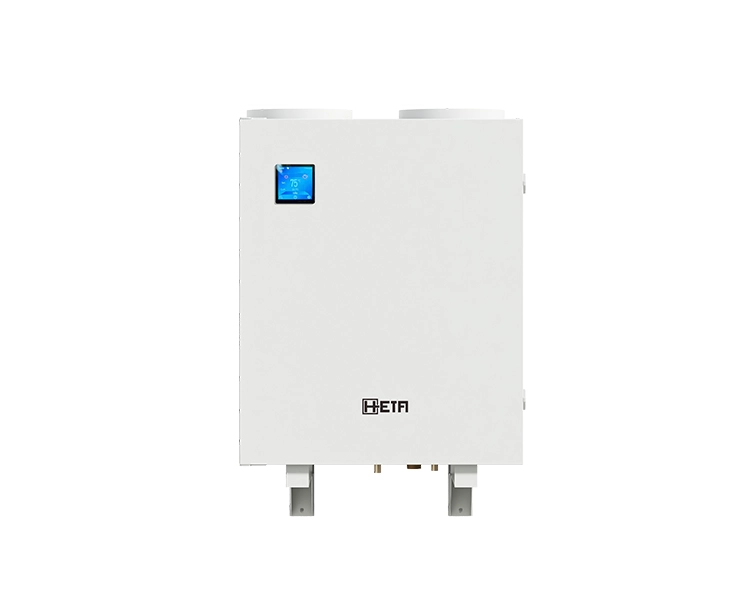
Mr. Hybrid R290 Wall-Mounted Hybrid (Low Charge 400 g)
Retrofit Projects with Limited Outdoor Space → Mr. Hybrid R290
Low charge, wall-mounted hybrid units reduce refrigerant risk and allow staged transitions away from fossil boilers.
Best for Retrofits & Apartments
The Mr. Hybrid wall-mounted indoor unit uses a very low R290 charge (~400 g) and can operate as a hybrid with existing boilers or electrical backup. Low charge reduces regulatory complexity for multi-unit buildings and limits the volume of hydrocarbons on site.
How “Hybrid” Solves Hydronic Upgrade Pain Points
Hybrid mode allows the heat pump to handle baseline loads while a boiler or electric backup steps in for peak loads or DHW boost — an installer-friendly way to phase out fossil systems without full hydraulic redesign.
Safety, Low Refrigerant Charge, and Future-Proofing
Small charge size reduces flammability risk in tight indoor spaces and simplifies compliance. The hybrid strategy gives purchasers lower risk in projects with legacy hydronics.
Technical Comparison Table
| Feature / Model | Capacity (kW) | Max Flow Temp | Ambient Operating Limit | Noise (typical) | Refrigerant | Best Application |
|---|---|---|---|---|---|---|
| Heatix R290 Monoblock | 7–21 | up to 80°C | Designed for -20°C+ | Moderate | R290 | Villas, radiators, rural |
| Heatix Plus R290 (Dual-Fan) | 18–21 | up to 80°C | Strong low-ambient performance | Moderate–High | R290 | Large homes, light commercial |
| Thermax R32 Monoblock | 7–16 | ~55–60°C (verify datasheet) | Good to -10°C / -15°C | Low–Moderate | R32 | Budget new builds, underfloor heating |
| Thermax R32 Split | 5–16 | ~55–60°C (verify datasheet) | Good to -10°C | Low | R32 | Apartments, limited outdoor space |
| Mr. Hybrid R290 Wall Mount | 5 | up to 75°C | Designed for retrofit | Low | R290 (400 g) | Retrofits, apartments, hybrid use |
NOTE: Use manufacturer datasheets and local cold-climate curves for final design. Table shows orientation only.
How to Select the Right Model (Practical Selection Framework)
A robust selection framework avoids surprises at commissioning and during warranty. Follow these six steps.
Step 1 — Identify Heating Load (kW by Building Type)
Run a proper heat loss calculation (EN ISO 13789 / local standards) — not just rules of thumb. For retrofit projects, model both worst-case and typical winter days; oversizing to cover extreme −20°C events is common but balance oversize penalties against cycling losses.
Step 2 — Match Temperature Needs (Floor Heating vs Radiators)
For underfloor heating (low flow temp), smaller capacities and R32 options can be efficient. For radiator systems requiring 65–80°C, prioritize R290 units rated for high-temperature output and check performance curves at those setpoints.
Step 3 — Match Climate Zone to Refrigerant Type
If design includes frequent sub-zero operation, choose R290 solutions with documented performance at -15°C to -25°C. For mild coastal regions, R32 remains an acceptable cost-driven choice.
Step 4 — Choose Monoblock, Split, or Hybrid System
- Monoblock: preferred where on-site refrigerant work should be minimized.
- Split: when indoor acoustics or restricted outdoor space is critical and refrigerant service capability exists.
- Hybrid: ideal for staged migration from boiler to heat pump, or where charge restrictions are important.
Step 5 — Consider Installation Constraints
Accessibility, crane or lift requirements, noise limits, and service access must be checked against unit dimensions, fan placement, and required clearance. Dual-fan large units may need two-man lifts and additional vibration isolation.
Step 6 — Evaluate ROI and Lifetime Cost
Calculate expected annual energy use using realistic COP curves at local ambient temperatures, factor maintenance, and any incentive schemes. Compare lifetime cost (CAPEX + OPEX) not lamp posts of nominal efficiency numbers.
Scenario-Based Recommendations (Real Use Cases)
Why Hetapro’s Solutions Stand Out?
Engineering Depth: Low-Ambient Testing, Defrost Logic
Models engineered for -20°C operation incorporate advanced defrost control and inverter staging: these increase seasonal efficiency and reduce the cycle losses often seen in basic designs. Look for documented low-ambient test curves and manufacturer test reports.
Certifications, Safety, CE, ErP
B2B buyers should request CE/ErP compliance documents, safety certificates for hydrocarbon refrigerant use in your jurisdiction, and test reports demonstrating the specified flow temperatures. Regulatory compliance is non-negotiable for European distribution.
After-Sales Support for Installers
Competitive distributor propositions include local spare parts, technical onboarding, commissioning support, training sessions and online diagnostics. These reduce first-time installation risk and shorten time-to-commission.
Supply Chain Reliability for Distributors
Check lead times, minimum order quantities, and the supplier’s spare-parts guarantee. In a market with rising demand for R290 products, predictable supply is a competitive advantage.
Conclusion — Fast Selection Summary for B2B Buyers
For cold-climate European installations prioritize: (1) verified low-ambient COP curves; (2) capacity at your required flow temperature (up to 80°C where necessary); (3) refrigerant choice suited to local regulation and service capability (R290 for deep-cold performance and regulatory alignment; R32 for cost-sensitive moderate climates); (4) system architecture that matches your installation constraints (monoblock heat pump for remote installs, split for urban retrofits, hybrid for phased upgrades). Use the scenario recommendations above as the starting point, then validate each candidate with manufacturer test curves and local site heat-loss calculations.
FAQs for Distributors & Installers
Q1: Is R290 safe for multi-unit apartment projects?
A: R290 is flammable; regulatory and safety design matters. Mr. Hybrid and other low-charge R290 solutions mitigate risk by minimizing charge size and placing most refrigerant outdoors or in purpose-designed indoor units. Always follow local codes and certified installation procedures. (See manufacturer guidance.)
Q2: Do R290 heat pumps really outperform R32 in deep cold?
A: Many comparative studies and manufacturer curves show R290 performing better at low ambient temperatures due to thermodynamic properties and system design optimization — but verify with published COP curves for the specific models under your expected ambient and flow conditions.
Q3: When is a split system preferable to a monoblock system?
A: Use split systems when indoor noise and indoor space constraints make indoor unit placement attractive and you have access to certified refrigerant servicing. Monoblock heat pumps are preferable where onsite refrigerant work should be minimized.
Q4: How should I size a heat pump for -20°C design days?
A: Perform a full heat loss calculation and consider a small degree of oversizing to meet extreme design days. Evaluate staging, buffer tanks and backup strategies (hybrid or boiler) rather than gross oversizing to avoid cycling losses.
Q5: What documentation should I request from a manufacturer?
A: Ask for CE/ErP certificates, low-ambient COP curves at multiple setpoints, detailed defrost strategy documentation, recommended commissioning steps, and local parts & service support information.