


Industrial High Temperature Heat Pumps for the Textile Industry
A dyehouse does not have one heat demand — it has six, each at a different temperature, each served by a different piece of equipment. Drag the slider below to match a heat pump series to your process, see which of the six HETAPRO machines fits, and find out where electrification genuinely beats a boiler and where it does not. No country assumptions, no blanket payback promise: just the engineering boundaries and the numbers behind them.
From a 60 °C dye bath to 150 °C steam: a solution for every temperature we reach
Select the temperature your process actually needs. The panel below identifies the matching heat pump series, the realistic COP at that lift, the heat sources that can feed it, and whether a boiler still has a job to do. Drag, or use the arrow keys. The scale runs to 150 °C because that is the highest temperature any HETAPRO machine delivers — the 110–150 °C band is the HT steam series. Processes demanding more than that, such as polyester high-pressure dyeing at 125–135 °C and stenter fabric heat setting at 160–210 °C, are not on this scale because no machine in the range reaches them.
Cotton pretreatment and hot wash — 80 / 95 °C
The classic pretreatment step: cotton in greige form carries hydrophobic waxes (0.4–1.2%) and pectin (0.7–1.2%) that must be broken down before dye can penetrate evenly. This is a hot-water duty, not a flame duty — a heat pump delivering circulating water at this temperature serves it directly, with no combustion and no flue. Note the industry trend: mill trials have run white shades at 85 °C instead of 98 °C and dark shades at 75 °C instead of 80 °C with quality preserved, so specify the reduced-duty machine if your process allows it.
Six industrial heat pumps, matched to your process and your available heat source
HETAPRO builds six high temperature heat pump machines: MT-W2W and MT-A2W (95 °C hot water), HT-A2W (135 °C hot water), HT-W2S and HT-A2S (110–150 °C saturated steam) and MT-A2A (30–85 °C hot air for drying). Which one is right for your dyehouse depends on two questions, not one: what temperature do you need, and what heat source do you actually have? Because a water-source machine and an air-source machine delivering the same 95 °C are different machines with different economics. The cards below are ordered by delivery temperature; the recommended one for your selected temperature band is highlighted.
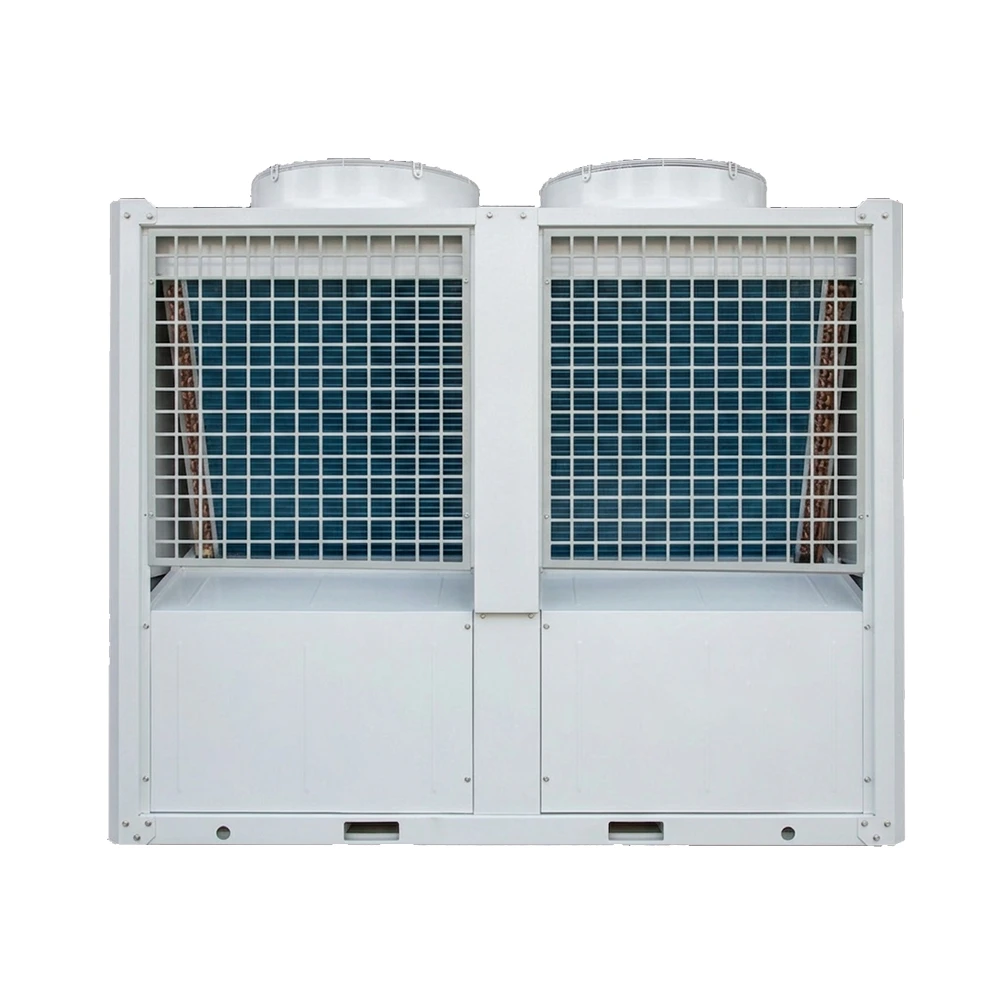
The workhorse of the dyeing hall. An air-source high temperature heat pump using ambient air as the heat source, producing hot water up to 95 °C for radiator heating, industrial hot water, high-temperature rinsing and process liquid heating. Stable at 95 °C even in low ambient conditions, and modular — up to 16 units can be connected in parallel, which is how a plant scales capacity without re-engineering the system.
- Reactive and direct dyeing jacket water, 60–80 °C
- Scouring and bleaching hot water, up to 95 °C
- Wash and bath make-up across the plant
- Ambient operation 10–40 °C, customisable down to −38 °C
Customisation available: minimum ambient operating temperature as low as −38 °C; maximum outlet water temperature up to 135 °C. Inverter control gives precise, stepless temperature regulation.
MT-A2W product page →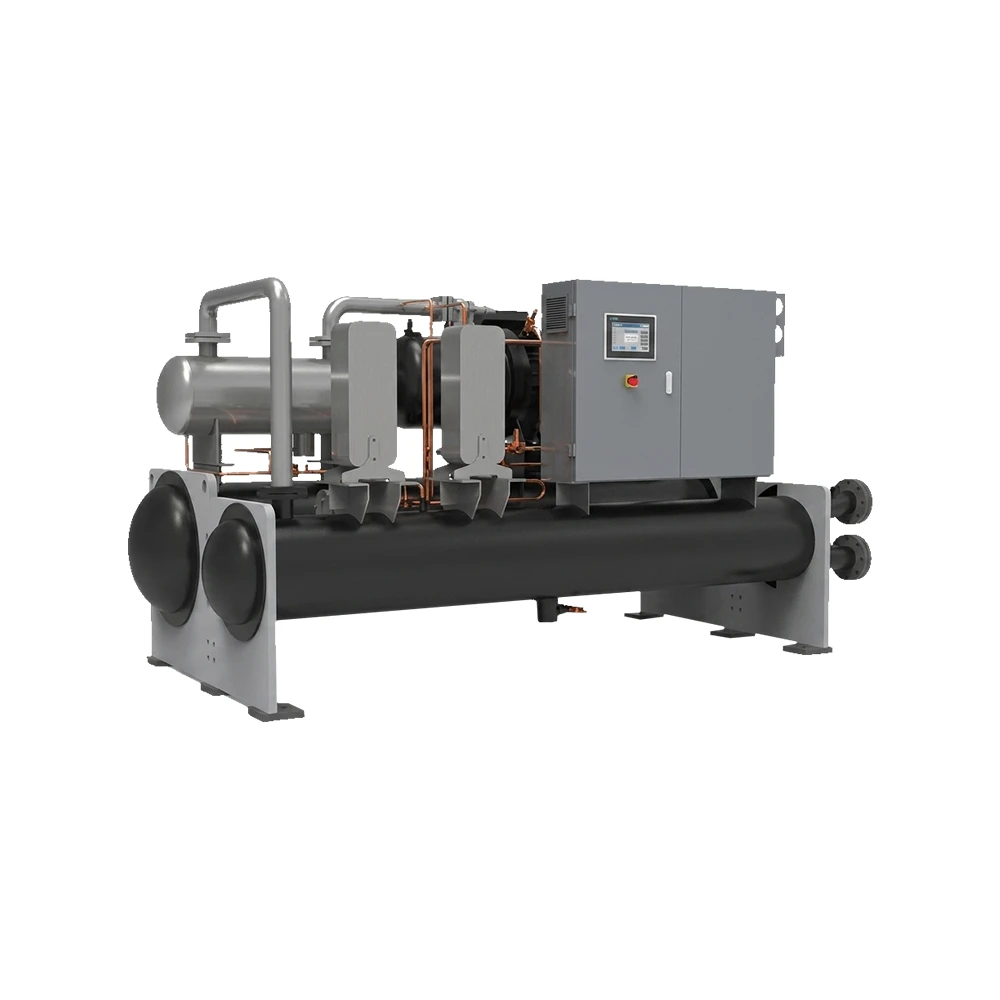
The most capable machine in the textile range, and the one the factory most often specifies for continuous dyeing load. A screw compressor with VFD, upgrading low-grade heat from water sources or waste heat into stable high-temperature hot water. Textile dyeing is named first among its documented applications, and the screw configuration is built for large industrial heating loads and long operating hours rather than cycling.
- Scouring and bleaching, 85–95 °C circulating water
- Continuous dyeing jacket and bath heat
- Post-dye hot wash and rinse
- Boiler feedwater preheat and steam buffer duty
*Manufacturer figure: COP up to 4.0 at heat source 60/52 °C and consumer side 87/95 °C. The published product parameter table lists COP 2.69–2.70 for the standard rating. Ask which applies to your duty point — the difference is roughly 45% of the energy bill. Applications also include food processing, beverage production, electroplating, chemical processing, pharmaceutical manufacturing, industrial cleaning and central heating.
MT-W2W product page →
A reciprocating-piston compressor raises ambient air to 135 °C of hot water. Designed for industrial and commercial hot water where the duty sits above what a scroll machine can hold — high-temperature rinsing, chemical liquid heating, electroplating temperature control and industrial hot water generation. The user side spans 100–135 °C.
- Fixing and steam-padding hot water at 100–110 °C
- High-temperature rinse and wash water
- Process liquid heating in dyeing house auxiliaries
- Load-bearing duty above the 95 °C scroll limit
Wide waste-heat source range 55–85 °C, built-in primary circulation pump optional, indoor installation permitted with auxiliary cooling. Modbus RTU over RS485 — it can act as a master controller integrating other devices, or as a slave unit driven by third-party equipment.
HT-A2W product page →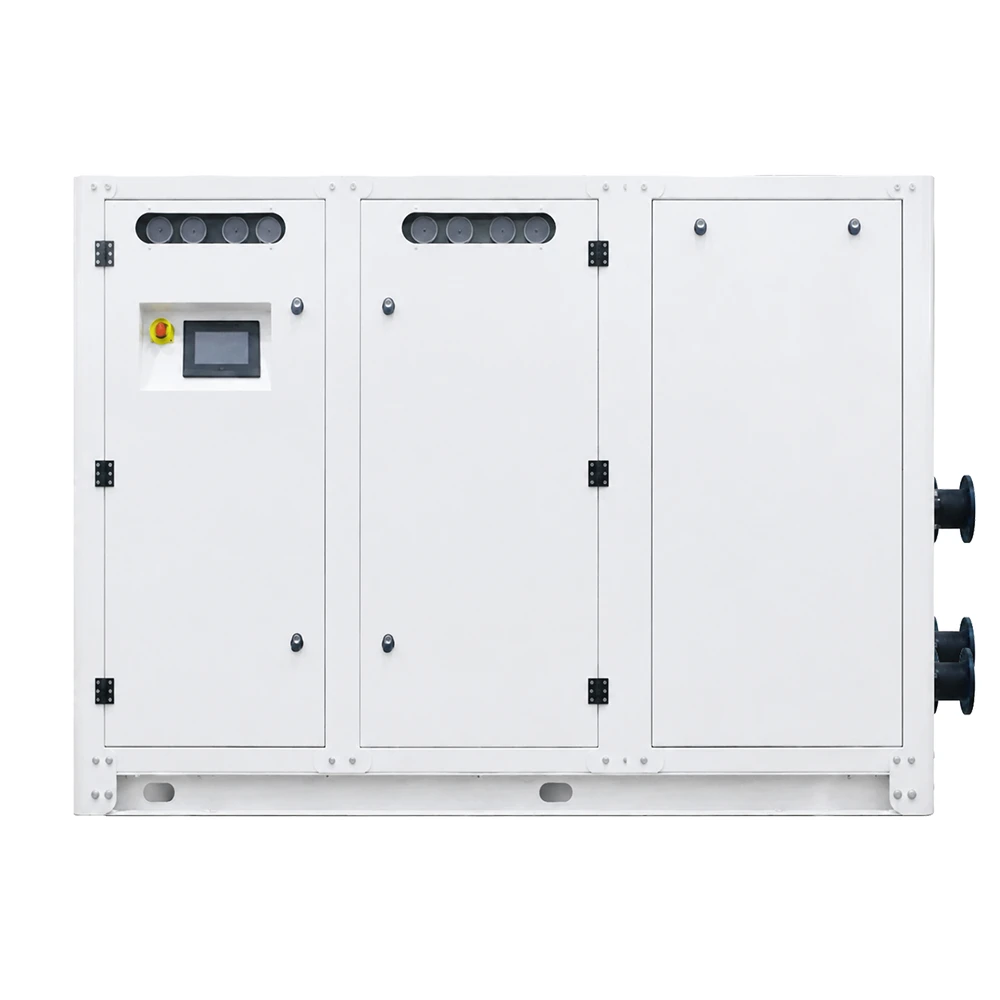
Turns 55 °C-plus waste hot water directly into 110–150 °C saturated steam. A high-efficiency single-stage compression system built for plants that have both significant waste hot water and continuous steam demand — the steam can feed the dyeing machine header directly, no intermediate heat exchanger required. Up to 500 kW per unit with a modular design for flexible combination.
- Fixing and steam-padding saturated steam, 100–110 °C
- Dyeing machine steam header top-up
- Condensate and flash-steam upgrade to process pressure
- Stenter chamber steam assist where gas firing is being reduced
Waste water source range 55–85 °C. Danfoss high-temperature inverter compressor, Danfoss plate heat exchanger, Danfoss/Siemens electronic expansion valve, Siemens PLC. RS485 with Modbus gateway, touchscreen controller, multi-level intelligent defrosting. CE, EMC and RoHS certified; water and electricity separated. Warranty 3 years with part components free.
HT-W2S product page →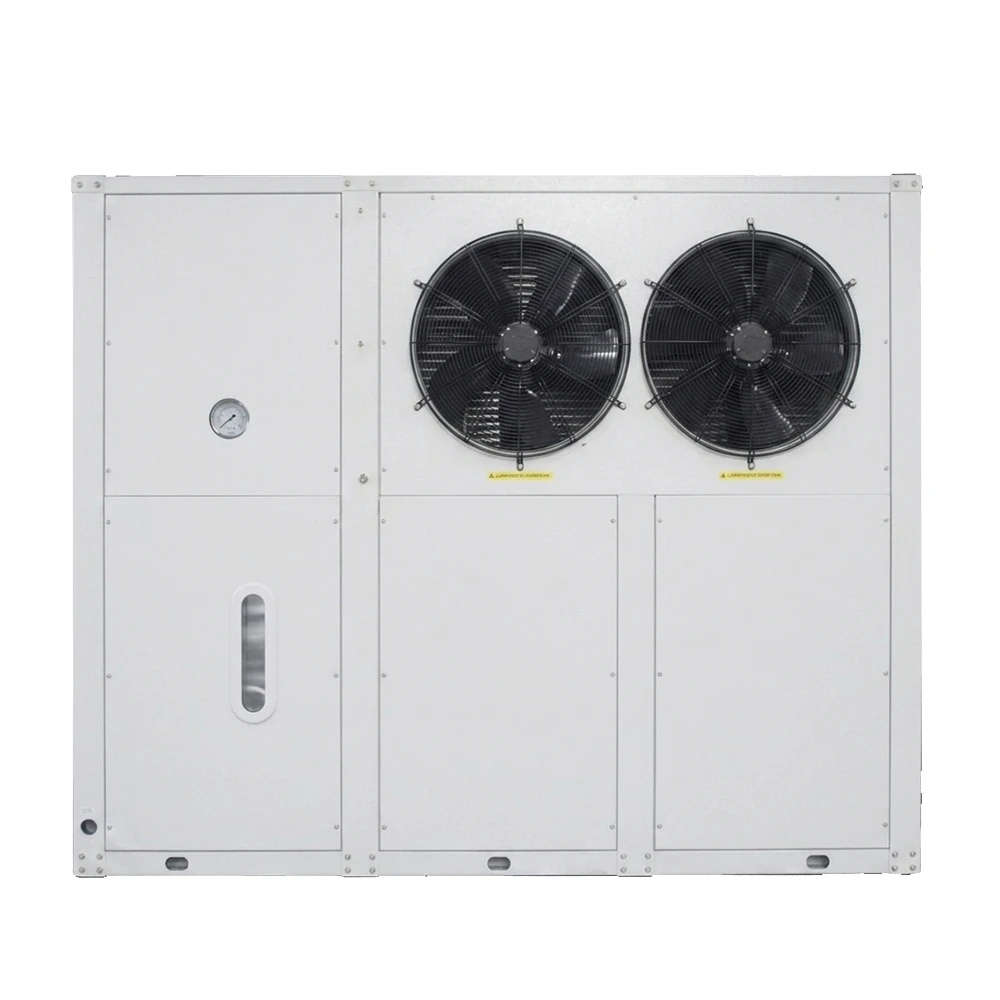
The same 110–150 °C saturated steam output as HT-W2S, but drawing on waste hot air rather than waste hot water. Where a plant has hot exhaust air — from a stenter, a dryer or an air-handling process — this is the route to steam generation without a waste-water network. Up to 220 kW per unit, modular, with the primary circulation pump built in as an option.
- Fixing and steam-padding saturated steam
- Stenter exhaust hot air recovered to process steam
- Dryer and finishing line exhaust heat upgrading
- Steam duty where no waste water is available
Waste heat source range 55–85 °C. Built-in primary circulation pump optional, indoor installation permitted for auxiliary cooling, 7-inch touchscreen, RS485 with Modbus gateway. Danfoss high-temperature inverter compressor and Siemens PLC. Documented applications include agriculture, biopharmaceuticals and rubber vulcanisation and drying.
HT-A2S product page →
Not a hot water machine but a hot air machine. MT-A2A delivers 30–85 °C supply air for industrial drying, using ambient air or recoverable waste hot air as the heat source, and it runs weather-independent — drying output does not fall when the weather changes. A unitary design makes installation straightforward, and 130 °C outlet air can be customised for high-temperature drying duties.
- One machine across four drying conditions: 30 °C low-temperature and heat-sensitive, 40–60 °C general fabric and food, 60–75 °C faster industrial drying, 75–85 °C high-temperature
- Stenter and dryer hot air supply
- Garment and fabric drying without a boiler
- Process air heating alongside process water heating
Inlet air 0–80 °C, rated supply air 60 °C, maximum 85 °C as standard and up to 130 °C customised. Power supply 380 V / 3N / 50 Hz. HANBELL high-temperature compressor, Danfoss/Sanhua valve, Siemens PLC. Actual drying and material temperatures must be set according to the specific product and process.
MT-A2A product page →| Model | Heat source | Source temp. | Output | Form | Compressor | Max unit | Textile duty |
|---|---|---|---|---|---|---|---|
| MT-A2W | Ambient air | ≥10 °C | 95 °C | Hot water | Scroll | 350 kW | Dyeing, wash water, scouring |
| MT-W2W | Water / waste heat | 60/52 °C | 95 °C | Hot water | Screw + VFD | 1500 kW* | Scouring, dyeing, boiler preheat |
| HT-A2W | Ambient air | 55–85 °C | 135 °C | Hot water | Piston | 220 kW | Fixing, high-temp rinse |
| HT-W2S | Waste hot water | ≥55 °C | 110–150 °C | Saturated steam | Single-stage | 500 kW | Fixing steam, dyeing header |
| HT-A2S | Waste hot air | ≥55 °C | 110–150 °C | Saturated steam | Single-stage | 220 kW | Steam from exhaust air |
| MT-A2A | Air / waste hot air | 0–80 °C | 30–85 °C | Hot air | Inverter | 300 kW | Drying, stenter hot air |
*MT-W2W maximum heating capacity 1500 kW is a manufacturer figure. COP is quoted as up to 4.0 at heat source 60/52 °C and consumer side 87/95 °C; the published product parameter table lists COP 2.69–2.70 for the standard rating. Confirm which basis applies to your duty point. Every machine above: Siemens PLC controller, RS485 with Modbus gateway, touchscreen operation, multi-level intelligent defrosting, and a 3-year warranty with part components free.
Does the heat pump actually beat the boiler on your site?
Two sliders, two formulas, no opinion. Set your own energy prices and boiler efficiency — the answer updates live. Use it as a screening test, then confirm with a proper audit.
Boiler heat cost = fuel price ÷ boiler efficiency · Heat pump heat cost = electricity price ÷ COP · Break-even COP = electricity price ÷ boiler heat cost. If your break-even COP is below what the series can deliver at your temperature, the project works on energy cost alone — before grants, carbon value or brand incentives.
What an industrial high temperature heat pump is — and what it is not
An industrial heat pump (IHP) is a vapour-compression machine that moves heat from a low-temperature source to a higher-temperature sink using an electrically driven compressor. Instead of burning fuel to create heat — where an electric boiler achieves an effective efficiency of 1.0 and a gas boiler roughly 0.76–0.85 after combustion and distribution losses — it transfers heat that already exists somewhere on site. Its useful output is a coefficient of performance (COP): for every 1 kW of electricity consumed, a COP of 3.5 delivers 3.5 kW of usable heat.
The critical engineering fact, and the one most product pages obscure, is that COP is a function of delivery temperature. The hotter the sink, the harder the machine works, the more electricity it consumes, and the lower the COP. Every temperature band therefore has its own machine, its own economics, and its own ceiling. That is what the selector above is built to show.
| Delivery temperature | Indicative COP | Comfortable duty | Commercial maturity |
|---|---|---|---|
| 40 – 55 °C | 4.6 – 5.5 | Wash water, general hot water, effluent make-up | Fully mature; large installed base |
| 60 – 80 °C | 3.9 – 4.6 | Dyeing, rinsing, general process hot water | Commercially available now |
| 80 – 95 °C | 3.3 – 4.0 | Scouring, bleaching, hot wash | Commercially available now |
| 95 – 110 °C | 2.8 – 3.4 | Fixing, steam padding, low-pressure steam | Available; buffer vessel usually required |
| 110 – 130 °C | 2.1 – 2.8 | Pressurised hot water, industrial laundry, high-pressure dyeing | Limited global installations |
| 140 – 150 °C | 1.5 – 2.0 | Garment drying, speciality finishing, pressure vessels | Pilot / very limited; not proven at scale |
The Apparel Impact Institute concluded in its 2025 Low Carbon Thermal Roadmap that the most commercially mature steam heat pumps deliver around 120 °C, that specialty dyeing and finishing steps require up to 180 °C, and that high-pressure polyester dyeing sits around 150 °C — a range with very limited industry capacity today. We agree, and we design to it. Heat pumps displace the 90–100 °C core of a dyehouse load, not an entire boiler house. Any vendor quoting routine 180 °C industrial heat pump operation for a wet-processing line is describing a machine that does not yet exist commercially.
The five process series, and the machine behind each
These five series describe the process bands in a dyehouse. Each one is served by one or more of the six HETAPRO machines in the recommended machines section above — the series tells you what the duty is, the machine tells you what to buy.
Process Heat — 30 / 60 °C
The base layer. Wash water, bath make-up, rinsing and general process hot water across the whole plant. It runs at the highest COP of any series, which makes it the quickest-payback machine in the portfolio and the natural first stage of any phased project. Sourced from dyehouse effluent at 30–50 °C where available, ambient otherwise.
Machine: MT-A2W (air source, scroll) · MT-A2A (hot air drying)
Dyeing — 60 / 80 °C
Reactive and direct dyeing of cotton knit, and most polyester-blend packages at atmospheric pressure. Jacket heating and bath make-up. This is the largest single share of a knit dyehouse thermal load and it sits almost exactly in the sweet spot of a high temperature heat pump, where the lift from a warm source is small enough to hold COP above 3.5.
Machines: MT-W2W (water source, screw — first choice where waste heat exists) · MT-A2W (air source, scroll)
Scouring & Bleaching — 80 / 95 °C
Cotton pretreatment, hot washing and bleaching. The demand is hot circulating water, not flame, so a heat pump serves it with no combustion, no flue and no stack-emission permit. Note that the industry is moving this temperature down anyway — mill trials have run white shades at 85 °C instead of 98 °C and dark shades at 75 °C instead of 80 °C with quality preserved.
Machine: MT-W2W — textile dyeing is a documented application of this model, with 1500 kW max unit capacity for continuous load
Fixing & Steaming — 95 / 110 °C
Saturated steam at 100–102 °C for fixation after reactive dyeing, and for pad-steam continuous dyeing. At the top of the comfortable band: a buffer vessel is normally required to ride through batch gaps so the boiler does not have to trim the header. A retained boiler becomes a peaking unit rather than the base load.
Machines: HT-W2S / HT-A2S (110–150 °C saturated steam) · HT-A2W (135 °C hot water) · MT-W2W (95 °C base + buffer)
High-Temperature & Drying — 110 / 150 °C
Pressurised hot water and saturated steam at the top of our range — industrial laundry, garment dryers and speciality finishing. Here COP falls to 1.5–2.8 and the machine is a specialist, not a commodity. 150 °C is the ceiling of the entire HETAPRO range: stenter fabric heat setting at 160–210 °C sits above it, which is why the stenter appears in this page as exhaust heat recovery rather than as a firing duty.
Machines: HT-W2S / HT-A2S (110–150 °C steam) · HT-A2W (135 °C hot water) · MT-A2A (30–85 °C hot air, up to 130 °C by customisation)
Every series can be fed four ways
(1) Dyehouse effluent at 30–50 °C — largest volume, cleanest; heat exchangers deliver 50–70 °C make-up water at COP 5 and above. (2) Steam condensate above 80 °C — closed-loop return typically captures 85–90% of generated condensate and cuts feedwater heating load. (3) Flash steam near 105 °C — effectively free at the point of generation. (4) Stenter exhaust at 140–180 °C — highest temperature, most contaminated; requires washable, corrosion-resistant surfaces.
Source decides the model: water above 55 °C → MT-W2W / HT-W2S · waste hot air → HT-A2S · ambient only → MT-A2W / HT-A2W
The three processes that decide the project
Scouring: the best economics in the plant, and the least glamorous
Cotton in greige form carries hydrophobic waxes (0.4–1.2%) and pectin (0.7–1.2%) that must be broken down before dye can penetrate evenly. Breaking those bonds traditionally means holding the bath close to 98 °C for 45–60 minutes, and because water has a high latent heat, steam is used purely to move large amounts of energy into the liquor quickly.
Two things make this process the strongest candidate for electrification. First, the demand is water, not flame: scouring needs hot circulating water at temperature, and a heat pump delivering 85–90 °C serves it directly. Second, the temperature is already falling. Published mill trials moved white shades from 98 °C to 85 °C and dark shades from 80 °C to 75 °C using rebalanced peroxide chemistry, saving 0.187 and 0.084 kg steam per kg of fabric respectively with absorbency, levelness and fastness preserved. Enzymatic pretreatment works near 59 °C. Every degree of process temperature reduction compounds: it lowers the lift the machine must deliver, which raises COP and shortens payback. Optimise the recipe first, then size the machine.
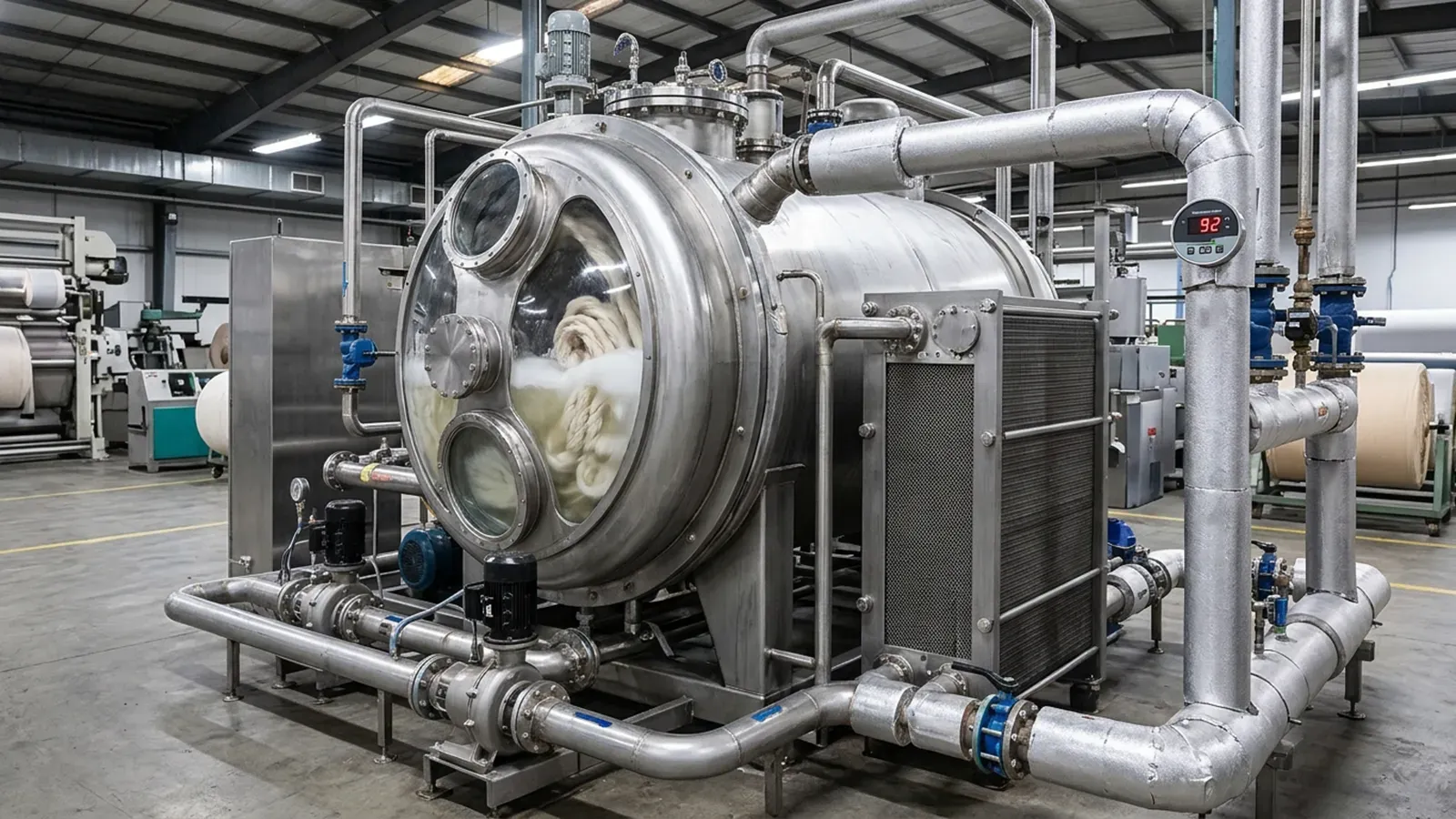
We do not claim a heat pump holds a 98 °C scouring bath on its own at typical COP. It holds 85–90 °C comfortably, and the gap between 90 °C and 98 °C is best closed by recipe optimisation and, where a small buffer is unavoidable, by retaining a modest steam buffer on the fixing header.
Dyeing and fixing: the largest share of your load, at the most comfortable temperature
Reactive and direct dyeing of cotton knit runs at 60–80 °C, with fixation and rinsing following in the same or an adjacent machine. This band sits almost exactly where a high temperature heat pump performs best: the lift from a warm source to 70–85 °C is small enough to hold COP above 3.5, and the demand is simultaneous and continuous across a running dyehouse, which means thousands of operating hours a year — the condition under which capital amortises fastest.
Published field measurements in Chinese knit dyehouses show high temperature heat pumps at COP 3.5–4.0 lifting 35–45 °C waste heat to 65–75 °C for process hot water, running 7,200 hours per year. Because the requirement is continuous rather than peaky, a single machine can also be a capacity-firming asset: it takes the base load off the boiler so the boiler stops cycling.
Fixing. After reactive dyeing, fixation and steam treatment typically need saturated steam at 100–102 °C. This is reachable with a buffer vessel but sits at the top of the comfortable band. Note also the machinery trend: modern low-liquor-ratio machines consume roughly 2 kg of steam per kg of fabric against 8–10 kg for conventional machines, and cut water by about two-thirds. If your dyeing machines are being replaced anyway, specify heat-pump-ready machines — a machine designed around 2 kg steam/kg is a far better heat pump host than a legacy winch.

Polyester. Disperse dyeing of polyester and polyester/elastane blends runs at 125–135 °C under pressure. That is above the reliable reach of commercially deployed heat pump technology today. Plan a retained boiler or electric boiler for those duties. Stating this plainly is more useful than a system that promises everything.
Stentering: heat recovery is the opportunity, not direct firing
A stenter (tenter frame) is the single largest thermal consumer in the finishing house. It stretches and fixes fabric through a series of heated chambers at fabric temperatures of 160–210 °C — polyester 190–210 °C, polyamide 175–190 °C, elastane blends 180–195 °C — and the exhaust leaving those chambers typically sits at 140–180 °C, heavily laden with moisture driven off the fabric. In most mills that energy simply goes up the extract duct.

There are two distinct recovery routes, and it is worth being precise about them.
Route 1 — static heat exchanger (what most vendors offer)
A plate or run-around coil exchanger recovers sensible heat only and preheats the combustion air entering the burner. Measured field data from a Chinese knit dyehouse shows exhaust at 160–180 °C, gas-to-air exchangers recovering 30–35% of sensible heat (1.8–2.2 MJ per kg of fabric), and stenter gas consumption falling 8–12%. A more aggressive exchanger study reports exhaust dropping from 180 °C to 85 °C with combustion air preheated to 95–120 °C.
Route 2 — heat pump lift (what a high temperature heat pump adds)
Because stenter exhaust is humid, a large share of its energy is latent. A static exchanger cannot touch that. A heat pump can recover the exhaust, lift it, and deliver useful heat to a different sink at a controlled temperature — process hot water for scouring and dyeing, or boiler feedwater preheat. That converts a stream you were burning fuel to reheat into a stream that displaces fuel elsewhere in the plant.
Heat pump lift: Q_useful = COP · P_elec, delivered at your chosen sink temperature — sensible + latent
Design consequences that matter in practice: stenter exhaust carries finish residue and lint, so the heat exchanger core must be drainable, washable and pre-filtered, with a cleaning interval matched to the finish load. A rotary enthalpy wheel specified without a wash and purge plan will blind within a season and the recovery will be bypassed — a failure that costs you credibility with your own operations team. Specify plate exchangers with planned washing where space allows; specify heavy-duty washable wheels only where there is a real cleaning interval and an access route. Route the condensate to the plant drain, not to potable water: it carries finish residues.
What the heat pump does not do: it does not heat the fabric to 190 °C and it does not replace the burner. It reduces the burner's load. Presenting that as a burner replacement is the fastest way to lose a technical buyer's trust.
Four recoverable heat streams, and the order to recover them in
| Source | Typical temp. | Delivers | Constraint |
|---|---|---|---|
| Dyehouse effluent | 30 – 50 °C | Clean 50–70 °C make-up water, COP 5+ | Fibre and dye-chemical fouling on the heat exchanger |
| Steam condensate | > 80 °C | Feedwater preheat, ~10–12% facility steam reduction | Requires a closed return loop and a pump |
| Flash steam | ≈ 105 °C | Low-pressure steam; combinable with MVR | Needs pressure lift to be usable in the header |
| Stenter exhaust | 140 – 180 °C | Combustion air preheat + process hot water | Lint and finish residue; washable core mandatory |
How we deliver it

High temperature heat pumps are not plug-and-play. Poor system design produces oversized equipment, underperforming assets and damaged confidence in the technology. Our sequence is deliberately conservative.
Level-1 energy survey and metering
Twelve months of fuel and electricity bills, bath temperatures and flows, production schedule by shade and fabric type, stenter chamber count and exhaust temperatures, condensate return practice. We size against your actual load profile, not a rule of thumb per tonne of fabric. Where a unit already runs below benchmark — the gap between 10–13 and 7–8 kg steam per kg of fabric is common — we will tell you that metering and control work pays back faster than we do.
Thermal, electrical and control design
Heat source identification across your streams, sink temperature definition per process, buffer vessel strategy, transformer and switchgear assessment, harmonics and voltage-drop review. We state the electrical infrastructure scope explicitly in the quotation, because this is where textile heat pump projects most often go wrong. HETAPRO machines are supplied for 380–415 V, 3-phase, 50 Hz as standard, with 60 Hz versions available, and the control architecture is PLC with HMI, high/low pressure and overload protection plus remote monitoring.
Staged installation
Stage 1 — effluent and condensate heat recovery plus feedwater preheat, which runs at COP 5+ and needs minimal lift. Stage 2 — the heat pump covering scouring, dyeing and fixing base load. Stage 3 — stenter exhaust recovery and combustion air preheat, or a high-temperature series project for laundry and drying. Each stage is independently justifiable and independently measurable, and Stage 1 pays for a meaningful share of Stage 2's capital.
Commissioning and IPMVP M&V
Control tuning, sensor calibration, performance testing at the design duty point, and a measurement and verification plan your lender or brand auditor can accept. Track COP, recovered kW and fuel displaced per shift — savings that are not instrumented are savings that are not believed.
Process integration support
Liquor ratio reduction, condensate return discipline, exhaust moisture control and burner tuning often deliver more than the machine does. We would rather reduce your heat demand before we sell you the capacity to serve it.
The six objections we get asked first
"The grid can't take it."
Fair. A high-lift continuous duty does need real electrical capacity. Mitigation is a staged design sized to your existing transformer headroom, solar or captive generation to displace daytime compressor load, and honest electrical scope in the quotation. We size to available capacity rather than to the theoretical requirement.
"How long is the payback?"
Be sceptical of anyone promising under one year. Industry screening reported by Aii across 17 textile manufacturers found typical heat pump payback of 5–8 years, against a supplier base accustomed to approving on a 2–3 year ROI. In most markets the underlying heat economics are more favourable than that gap suggests, but the approval horizon remains the binding constraint. Phasing the project so Stage 1 carries a short payback is the standard answer.
"Will it affect fabric quality?"
Not on the thermal side, provided the recipe is respected. The heat pump controls temperature, not chemistry; fixation, levelness and fastness are functions of residence time, pH and salt, not of how the steam was made. The genuine risks are different ones: control instability causing overshoot, and machine compatibility. Both are engineering items handled in design.
"Our dyes are sulphur-based."
Reducing-c dyeing needs a controlled atmosphere and is a legitimate reason to retain boiler capability. We scope this explicitly during design rather than discovering it during commissioning. Thermal separation of reduced-liquor dyeing from the heat pump circuit is standard practice.
"What happens in a power outage?"
The heat pump is a compressor-driven device, so it stops with the power. For a dyehouse running continuous shifts this must be designed for: buffer thermal storage sized to ride through the outage profile, and retained boiler or electric boiler capability on standby. Where a site has captive power or solar, compressor load can be shifted to generation windows.
"What about service and spares?"
A heat pump for a 24/7 dyehouse needs a defined support model. We supply the control architecture, spares philosophy and remote monitoring; where local service cannot be guaranteed we say so up front rather than discovering it during a breakdown at 02:00 in the dyeing shift.
Frequently asked questions
Which textile processes can a high temperature heat pump actually cover?
Commercially, 40–120 °C — which is the majority of a knit dyehouse thermal load. That covers scouring and bleaching (85–95 °C), reactive and direct dyeing (60–80 °C), bath make-up and wash water, and fixing and steam padding (100–102 °C) with a buffer vessel. Above 120 °C, pressurised hot water for industrial laundry and garment dryers is available from specialist vendors with limited global installations. Routine 180 °C industrial heat pump operation does not exist commercially today.
Can it replace my boiler completely?
No, and that framing is a mistake. Aii notes steam heat pumps are capped at around 2 MW while average boiler capacity in its survey was nearly 18 MW, so whole-facility electrification is not a realistic proposition this decade. The realistic and bankable pattern is partial electrification: the heat pump carries the base load, the boiler becomes a peaking unit for high-pressure polyester dyeing at 125–135 °C and any duty above 120 °C. Meaningful decarbonisation this decade comes from targeted, process-specific installations.
How is the COP of a high temperature heat pump determined?
COP is output heat divided by input electricity, and it is a strong function of the temperature lift the machine must achieve. At a nominal 25 °C ambient, typical industrial performance runs from about 4.6–5.5 at 40–55 °C delivery, down to 3.2–4.0 at 85–95 °C, 2.7–3.4 at 100–110 °C, 2.1–2.8 at 115–130 °C and 1.5–2.0 at 140–150 °C. Real figures depend on condenser approach, source temperature, compressor selection and part-load behaviour, which is why we ask for a guarantee at your duty point rather than quoting a catalogue maximum.
What heat sources can feed the machine?
Four in a textile plant: dyehouse effluent at 30–50 °C, which is the largest and cleanest and yields COP 5 and above through a heat exchanger; steam condensate above 80 °C, where closed-loop return typically captures 85–90% of condensate and reduces facility steam consumption by roughly 10–12%; flash steam near 105 °C, effectively free at the point of generation; and stenter exhaust at 140–180 °C, the highest temperature but the most contaminated, requiring washable corrosion-resistant surfaces. A heat pump can also draw on ambient air, which is the fallback when no better source exists.
How much can I recover from a stenter?
Two different answers depending on the device. A static air-to-air heat exchanger on stenter exhaust recovers sensible heat only; field measurements report 30–35% of exhaust sensible heat captured, equivalent to 1.8–2.2 MJ per kg of fabric and an 8–12% reduction in stenter gas use, with one reported installation bringing exhaust from 180 °C down to 85 °C and preheating combustion air to 95–120 °C. A heat pump can additionally capture the latent fraction, because stenter exhaust is heavily moisture-laden, and deliver it to a different sink such as process hot water or boiler feedwater. The heat pump does not fire the stenter and does not bring the fabric to its setting temperature — it reduces the burner's load.
Can it handle high-pressure polyester dyeing at 130 °C?
Not with today's commercial technology. Disperse dyeing of polyester and polyester/elastane blends under pressure operates around 125–135 °C. The correct engineering response is partial electrification: the heat pump covers the base load and the boiler remains as a peaking unit. The same position is taken by steam heat pump vendors serving the Philippine and Indian textile markets, and we would rather state it up front than have you discover it in production.
What electrical infrastructure do I need?
Three-phase power and enough headroom for the connected load. HETAPRO equipment is supplied for 380–415 V, 3-phase, 50 Hz, with 60 Hz versions available. Typical requirements include larger transformers, upgraded switchgear and standby generation — which also means cost and lead time. We assess and state the electrical scope in the quotation rather than treating it as an owner's cost discovered later. If your transformer has no headroom, a staged design sized to existing capacity remains viable.
Does the heat pump produce cooling as well?
Yes, and in some layouts it is a meaningful secondary benefit. A vapour-compression machine rejects heat at the condenser, which is the useful output, and absorbs heat at the evaporator, which produces chilled water as a by-product. In a dyehouse that chilled water can serve process cooling, air-conditioning or comfort ventilation, particularly in hot climates. It is a secondary benefit, not a design driver — size the machine for the heat duty.
What is the realistic payback period?
Be sceptical of anyone promising under one year. Industry screening reported by the Apparel Impact Institute across 17 textile manufacturers in India, China and Vietnam found typical heat pump payback periods of 5–8 years, against a supplier base accustomed to approving on a 2–3 year ROI, and an average electricity-to-fuel price ratio of 4.02 — far above the threshold for an unassisted business case. The Aii conclusion is that grant funding and brand-backed financing are currently a necessity rather than an optional extra. Use the calculator above to test your own prices, then confirm with an audit.
How do I know whether my plant is even ready for this?
Three checks cost nothing. First, compute your steam-to-fabric ratio: the widely observed range in cotton knit dyeing is 10–13 kg steam per kg of fabric against 7–8 for an efficient plant — if you are near 13, metering and control work will probably beat any heat pump investment. Second, meter one stenter exhaust run for a week and record flow, temperature and humidity; without humidity you cannot judge whether condensing recovery is worth it. Third, check your transformer spare capacity. If all three indicate headroom, this project is worth scoping properly.
Get a sized scheme from your own data
We do not quote from a per-tonne rule of thumb. Send us the following and we will return a sized system per series, projected COP at your duty point, estimated savings, payback range and the electrical scope — with every assumption written down.
- Twelve consecutive months of fuel and electricity bills
- Your dyehouse machine list — type, capacity, working temperature, jacket or direct steam
- Production schedule — tonnes per day by fabric type and shade (cotton reactive vs. polyester disperse matters)
- Scouring — bath volume, liquor ratio, current temperature and dwell time
- Stenter — number of machines, chamber count, exhaust temperature if measured, burner fuel
- Electrical — transformer rating, spare capacity, existing boiler capacity and header pressures
Sources and methodology
- Apparel Impact Institute (Aii) — Low Carbon Thermal Roadmap (2025) and Clean Heat in Textile Manufacturing: Lessons on Steam Heat Pumps to Date: ~120 °C commercial ceiling; speciality finishing to 180 °C; high-pressure polyester ~150 °C; 5–8 year payback; average electricity-to-fuel price ratio 4.02 across 17 screened manufacturers; steam heat pumps capped ~2 MW vs. ~18 MW average boiler; partial electrification as the near-term path.
- Sustainability (MDPI) 18(17):8676 (2026) — field measurements at a Zhejiang knit dyehouse: stenter exhaust 160–180 °C; gas-to-air exchanger recovering 30–35% of sensible heat (1.8–2.2 MJ/kg fabric) with 8–12% stenter gas reduction; condensate return capturing 85–90% at >80 °C giving ~10–12% facility steam reduction; high temperature heat pumps at COP 3.5–4.0 lifting 35–45 °C to 65–75 °C, 7,200 h/year.
- Stenter heat recovery studies (Dyna, Colombia; HeatRecoveryHub) — exhaust 140–180 °C; heat setting duty 11.01 GJ/ton; 50–65% recovery potential on a 25,000 m³/h exhaust; exhaust reduced 180 °C → 85 °C with combustion air preheated to 95–120 °C; drainable, washable cores required given finish residue and lint.
- Textile Today — Alliance Knit Composite trial — 100% cotton single jersey pretreatment optimised from 98 °C to 85 °C (white) and 80 °C to 75 °C (dark), saving 0.187 and 0.084 kg steam/kg fabric with quality preserved; average boiler efficiency of 76% in the garment industry; wet processing ~38% of total fibre-to-fabric energy.
- Textile process benchmarks (TextileEdu; ACME at DTG 2025) — conventional steam consumption 6–9 kg/kg (open winch) vs. 1.2–2.0 kg/kg (air-flow); low-liquor machines ~2 kg steam/kg vs. 8–10 kg for conventional; heat setting temperatures — polyester 190–210 °C, polyamide 175–190 °C, elastane blends 180–195 °C, acrylic 160–180 °C.
- Energy audit benchmarks (ORDNUR, Bangladesh; Energy Solutions Intelligence) — textile dyeing SEC 10–13 kg steam/kg fabric against 7–8 for an efficient plant; conventional jet dyeing 4.5–7.0 kWh/kg thermal against 3.0–5.0 for low-liquor machines.
- Cost basis for the calculator — boiler heat cost = fuel price ÷ boiler efficiency; heat pump heat cost = electricity price ÷ COP; break-even COP = electricity price ÷ boiler heat cost. COP bands are typical industrial values at a nominal 25 °C ambient and are indicative only; request a guarantee at your duty point. All prices are entered as ratios in any currency, since only the relative level matters.
- Market context — Business of Fashion on the Epic Group Bhubaneswar net-zero facility (135 °C heat pump supplying 130 °C pressurised hot water to Tonello dryers, IFC-financed, 12,500 t CO₂ displacement over pilot life); TRIGeN Decarbonisation published specifications (60 kW at 120 °C, 150 kW at 140 °C, up to 2,000 kW, 380–440 V / 3Ph / 50–60 Hz, heating COP 1.7–3.7, combined COP 2.5–4.0); Karnot's textile application guidance for the Philippine market, which states explicitly that high-temperature polyester dyeing at ~130 °C exceeds heat pump reach and retains a boiler top-up.
Figures on this page are either drawn from the cited public sources or calculated from the assumptions stated alongside them. Vendor-published performance figures for competing systems are reproduced as market context and have not been independently verified. Savings and payback for your specific plant can only be established from your own utility bills, process data and site survey. Nothing on this page constitutes a performance guarantee.