


One degree decides the yield.
We deliver that degree.
Lithium battery drying, dry-room regeneration, wafer wet cleaning, hot ultrapure water — the heat that decides whether a cell or a wafer passes, produced at 30–150 °C with no flame. HETAPRO heat pumps take the low-grade heat your process already throws away and put it back where it earns money.
Set the temperature. The series, the COP and the machine follow.
Choose the temperature your process actually holds — not the nameplate maximum — and the panel returns the matching series, the realistic COP at that lift, the heat source that can feed it, and whether a boiler still has a job. Drag the slider or use the arrow keys. The scale stops at 150 °C because that is the highest temperature any HETAPRO machine delivers. Diffusion, oxidation, LPCVD and epitaxy at 800–1,200 °C are not on it, because no heat pump reaches them and pretending otherwise is how a supplier loses a fab engineer in the first meeting.
Anode coating, IPA vapour drying, calendering rolls — 80 / 95 °C
Anode coating lines using water-based slurry run 75–110 °C, with the first zones in this band; IPA vapour drying needs 80–100 °C and calendering rolls 80–120 °C. Heat arrives as hot water through an oven coil or a roll circuit, or as hot air where the line was built around a direct-fired heater. This is where a 95 °C water-source machine stops being a utility device and starts carrying process load.
Two industries, one thermodynamic problem
Battery plants and wafer fabs look nothing alike, yet they waste energy in the same shape. Both need heat at a precise temperature, both reject enormous quantities of low-grade heat a few metres away, and both have been trained by decades of cheap gas to solve the first problem by burning fuel and the second by running cooling towers.
The numbers make the case on their own. A cathode coating line holds six or seven drying zones between 85 °C and 130 °C and exhausts air at 70–105 °C. A lithium dry room holds −40 °C dew point by regenerating desiccant at 120–140 °C, and that regeneration alone can be 30–40% of the dry room's energy. A wafer wet bench runs SPM at 120–150 °C and SC-1/SC-2 at 65–85 °C, while the sub-fab chillers reject condenser water at 30–40 °C around the clock.
Heat is the yield variable
Oven temperature swings crack electrodes and shift solvent residue. Bath temperature shifts etch rate and particle removal. Precision is not a comfort feature here — it is the process.
Heating and cooling at once
Both plants run chillers and heaters on the same day, often in the same room. A water-source heat pump moves that heat instead of buying it twice.
Scope 2 is now audited
Battery customers audit their suppliers' carbon intensity; fabs report to their own customers. On-site combustion is the easiest line item to delete.
The waste heat is already there
Oven exhaust, chiller condensers, wet-bench overflow, CDA compressor heat. None of it needs to be generated — only lifted.
Eighteen process steps, band by band
The selector above answers one question — what series does this temperature need. This index answers the other: which process steps actually sit in each band, across both industries. Filter by band, or read the whole list.
Lithium battery manufacturing
Cell production is a drying business with a coating problem attached. Moisture and solvent have to leave the electrode at a controlled rate; later, moisture has to be kept out of the cell entirely. Both jobs are heat jobs, and both are usually served by gas burners whose exhaust is then thrown away.
| Process step | Working temp. | Heat form | Series | Why it matters |
|---|---|---|---|---|
| Cathode coating drying | 85–130 °C | Hot air, 6–7 zones | HT-A2W · HT-W2S | NMP evaporates here; zone temperature sets adhesion and residue |
| Anode coating drying | 75–110 °C | Hot air | HT-A2W | Water-based slurry, higher air volume, lower temperature |
| Calendering | 80–120 °C | Hot water / hot oil roll | HT-A2W | Roll temperature sets electrode density uniformity |
| Dry-room regeneration | 120–140 °C | Regeneration air | HT-W2S · HT-A2W | Holds −40 °C dew point at 20–25 °C; 30–40% of dry-room energy |
| Vacuum bake | 85–120 °C | Hot water jacket | MT-W2W · HT-A2W | 8–24 h cycles; moisture left here becomes HF later |
| NMP recovery | 100–130 °C | Low-pressure steam | HT-W2S · HT-A2S | Distillation reboiler duty; NMP boils at 202 °C at ambient pressure |
| Formation & ageing | 25–45 °C | Cooling + trim heat | MT-W2W | Chambers reject heat continuously — a free source for the loops above |
| Electrolyte filling | 18–25 °C, ≤ −40 °C DP | Dry air | Dry-room system | Electrolyte is moisture-critical; no direct heat pump contact |
Coating drying and NMP: the biggest single load
Electrode drying is usually described as an oven problem, but it is really an energy-recovery problem. Cathode lines hold 85–130 °C across six or seven zones and exhaust 70–105 °C air saturated with NMP. That exhaust is hot enough to be a heat source and dirty enough that most plants simply vent it to the recovery unit and then to atmosphere.
The architecture that works is a bypass, not a rebuild. Exhaust is drawn off after particulate filtration, passes through the heat pump evaporator, and returns as 85–130 °C supply air to the oven. The oven's internal ducting, zone control logic and original burner stay exactly where they are — the heat pump becomes the base-load heat source and the burner becomes backup, switching in on demand or on fault.
What the numbers look like
NMP boils at 202 °C with a latent heat around 540 kJ/kg. Cathode drying typically runs 85–130 °C; anode (water-based) runs 75–110 °C. Exhaust leaves at 70–105 °C. Industry estimates put coating and drying at roughly half to two-thirds of a cell plant's energy demand — which is why this single loop decides the plant's energy bill.
Why recovering exhaust beats air-source
An air-source unit lifting ambient air to 120 °C works hard for every degree. A unit lifting 90 °C exhaust to 120 °C works across a much smaller span, so the same compressor delivers far more heat. Cascade systems lifting 50–70 °C waste heat to 120–150 °C typically land at COP 2.5–3.5; air-source units at 80–95 °C reach 3.5–4.8 on vendor data. Treat both as indicative, not guaranteed.
Dry rooms: the load nobody budgets for
A lithium dry room is not air-conditioning. It holds −40 °C dew point, 20–25 °C and below 1% relative humidity, because a few milligrams of moisture in a sealed cell will generate hydrofluoric acid and end the cell's life. Refrigeration alone cannot reach that dew point — desiccant wheels do, and wheels are regenerated with hot air.
Conventional wheels need 120–140 °C regeneration air. That is squarely inside HETAPRO's range: HT-W2S produces 110–150 °C steam, HT-A2W produces 135 °C hot water for a regeneration coil. Mid-temperature wheels, now used in volume production, regenerate at 70–90 °C — low enough for MT-W2W hot water and low enough to use recovered chiller heat instead of a dedicated heater.
| Wheel type | Regeneration temp. | Best heat source | Trade-off |
|---|---|---|---|
| Conventional silica gel / molecular sieve | 120–140 °C | HT-W2S steam · HT-A2W 135 °C water | Proven at −40 to −60 °C; higher-grade heat, lower COP |
| Mid-temperature regeneration wheel | 70–90 °C | MT-W2W water · recovered chiller heat | Higher COP and cheaper heat, but needs wheel selection from the start |
| Two-stage wheel train | 80–110 °C / 90–135 °C | HT-A2W + MT-W2W combination | Reaches −50 to −60 °C for electrolyte and formation areas |
Vacuum bake and calendering: the quiet loads
Vacuum bake runs 85–120 °C for 8–24 hours per cycle, often across dozens of chambers, and it is a pure hot-water jacket load — no air, no steam, no complexity. Calendering is the same story at 80–120 °C on the roll. Neither is glamorous, both run continuously, and both are trivially served by 95 °C or 135 °C hot water from a unit that is already recovering heat elsewhere in the plant.
Semiconductor wafer processing
A fab's thermal problem is the mirror image of a battery plant's. The process temperatures are lower — mostly 60–150 °C — but the purity requirements are extreme, the uptime requirement is absolute, and the waste heat is enormous and continuous. A fab that gets its hot water from a gas boiler while its chillers reject 30–40 °C water to cooling towers is burning money in both directions at once.
| Process | Working temp. | Heat form | Series | Constraint |
|---|---|---|---|---|
| SPM / piranha strip | 120–150 °C | Steam or 135 °C water via HX | HT-W2S · HT-A2W | Quartz / PFA bath, no metal contact |
| SC-1 (APM) | 65–80 °C | Hot water, double-wall HX | MT-A2W · MT-W2W | Ammonia chemistry, venting |
| SC-2 (HPM) | 65–85 °C | Hot water | MT-W2W · HT-A2W | HCl chemistry, corrosion allowance |
| Hot DI / UPW rinse | 60–90 °C | Hot UPW loop | MT-W2W | No copper or brass wetted parts |
| IPA vapour drying | 80–100 °C | Hot water / hot N₂ | MT-W2W · HT-A2W | Solvent zone, Ex rating |
| Post-CMP clean | 60–80 °C | Hot water | MT-A2W | Slurry preheat also possible |
| Plating baths | 40–60 °C | Hot water + cooling | MT-W2W | Simultaneous cold for rectifier cooling |
| Cleanroom MAU reheat | 18–25 °C | Hot water coil | MT-W2W | Huge air volume, tiny ΔT — recovery essential |
Purity is the real engineering problem
Nobody in a fab cares that a heat pump can reach 90 °C. They care whether it can reach 90 °C without putting a single metal ion into the water. That constraint reshapes the whole system: the refrigerant circuit stays entirely outside the process, heat crosses a double-wall exchanger with a monitored intermediate loop, and every wetted surface is 316L stainless (EP where required), high-purity PFA or quartz-compatible material.
The heat recovery prize: chillers that heat the fab
Semiconductor fabs run chillers year-round to hold process cooling at 5–12 °C, and reject the condenser heat at 30–40 °C. At the same time they buy heat to hold baths at 65–85 °C, hot UPW at 60–90 °C and cleanroom make-up air at 18–25 °C. That is a heat pump's ideal case: a warm, constant source and a nearby sink, with a lift of only 40–50 K.
Because the unit cools as it heats, the chilled water it produces can go back to the process cooling loop. System COPs of 4–6 are realistic for this configuration because you are effectively paid twice — once for the heat delivered, once for the chiller load avoided. It is the single highest-value heat pump project available in most fabs, and it is usually blocked not by thermodynamics but by the fact that the chiller plant and the hot water plant are owned by two different teams.
Beyond the two flagships
The same process physics appears across new energy and electronics manufacturing. None of these needs a different product family — they need a different load calculation.
PV cell wet processing
Texturing and cleaning baths at 70–85 °C, hot DI rinse and emitter-wash steps. High volume, continuous, and a natural fit for 95 °C hot water.
ESS pack & module testing
Thermal chambers cycling 25–45 °C reject heat continuously; recovered condenser heat can preheat the next chamber or the plant's hot water.
Composite & blade curing
Mould and oven heating at 40–90 °C for resin cure, with post-cure above 120 °C where the heat pump hands over to electric.
PCB & display wet lines
Desmear at 70–80 °C, plating baths at 40–60 °C, hot-air knife drying at 70–85 °C — low temperature, high uptime, fast payback.
Six series, matched to process step
Battery drying and wafer wet processing use four of the six families. The two steam units matter more here than in any other industry we serve, because dry-room regeneration and SPM stripping both need heat above 110 °C. The cards outlined in red follow the temperature band currently selected in the selector above — change the slider and the recommendation changes with it.
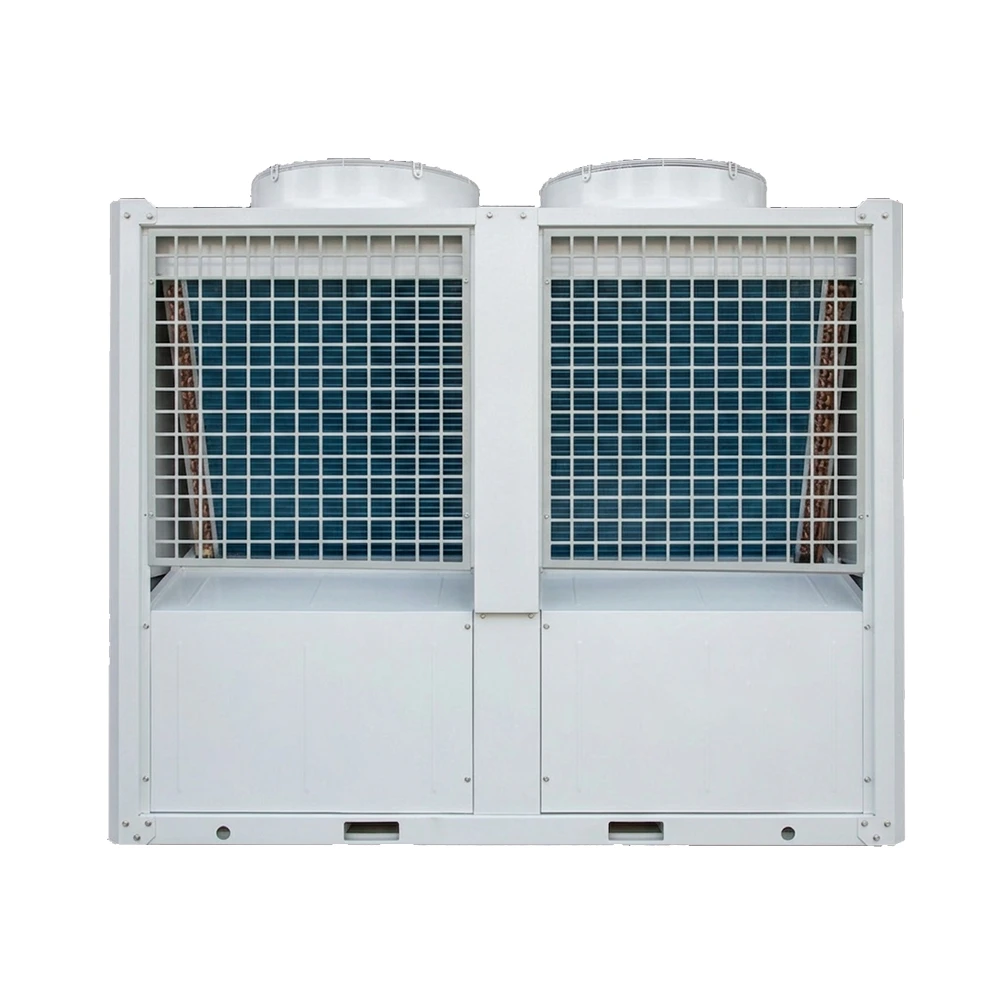
SC-1/SC-2 baths, post-CMP clean, general hot water where no waste heat source is available.
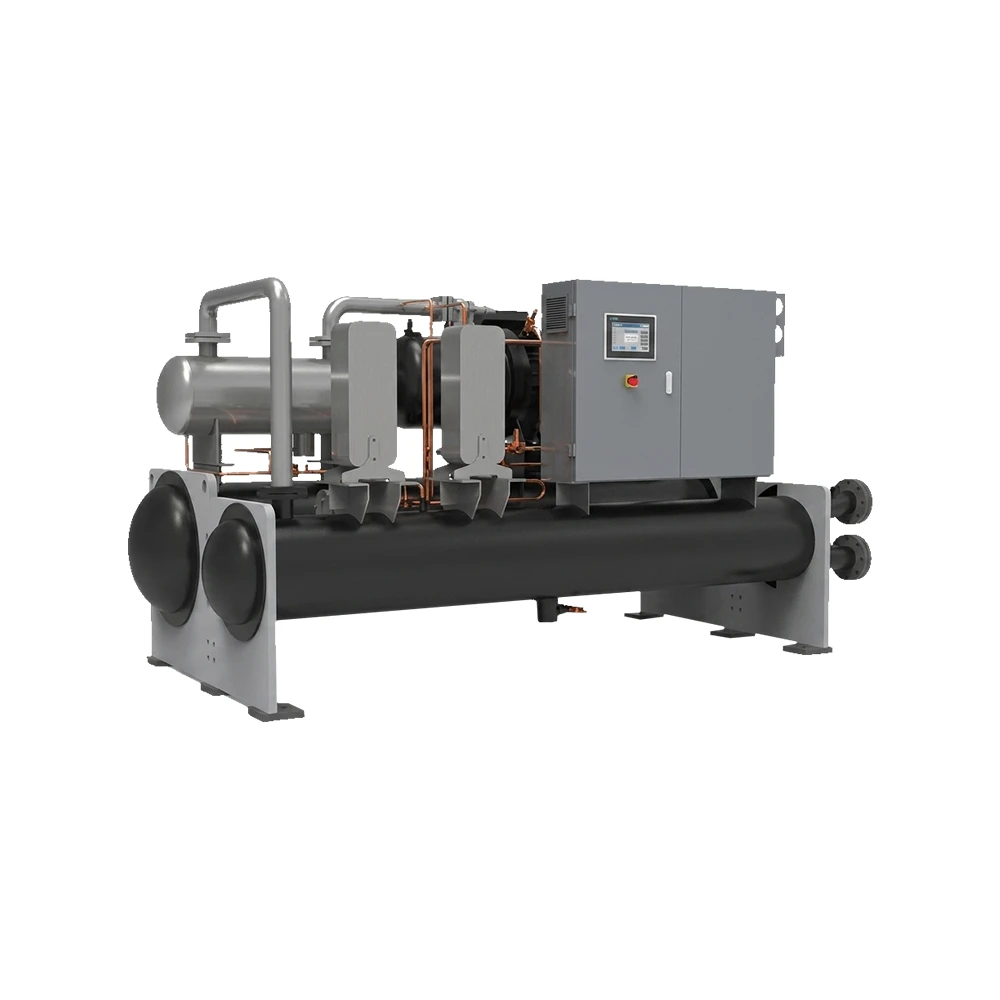
The workhorse for fab heat recovery and battery vacuum bake: chiller condensers and wet-bench effluent become the heat source.

Coating oven coils at 120–130 °C, calendering rolls, vacuum bake, dry-room regeneration coils.
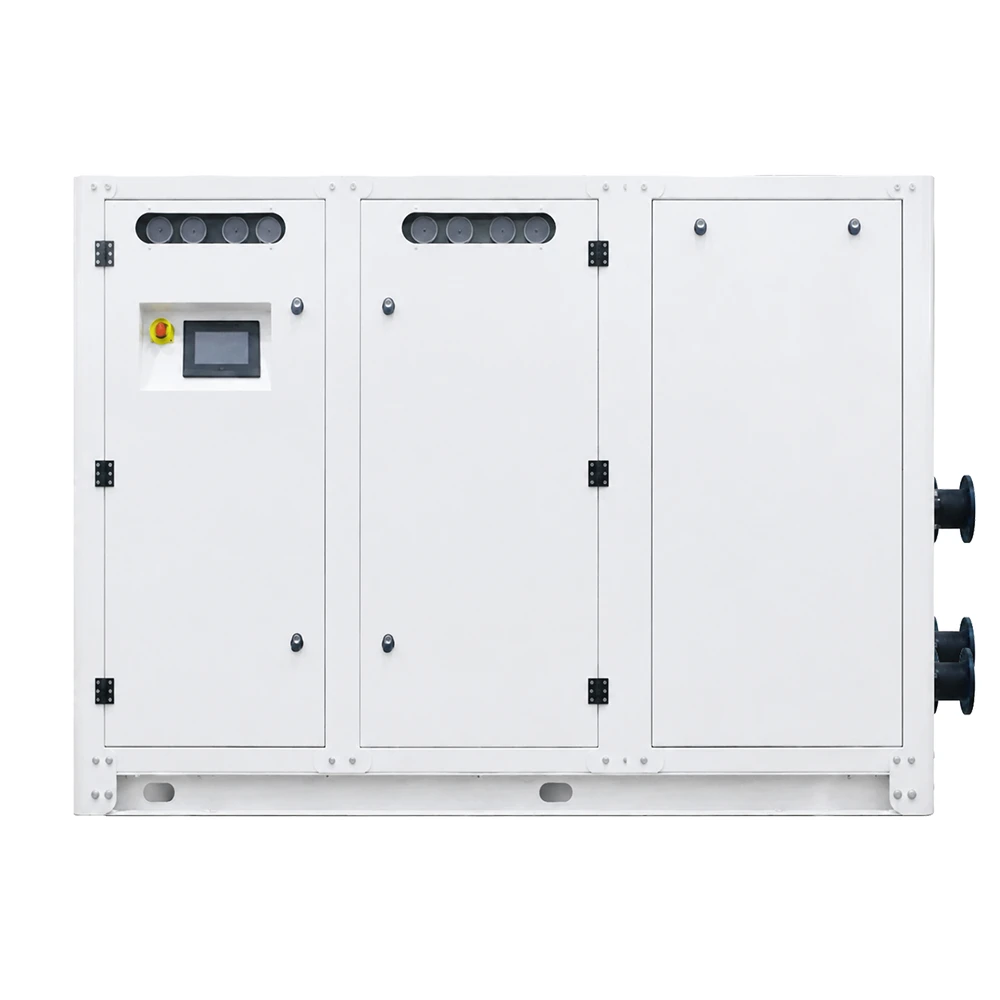
SPM baths, NMP recovery reboilers and conventional dry-room regeneration where 120–140 °C air is required.
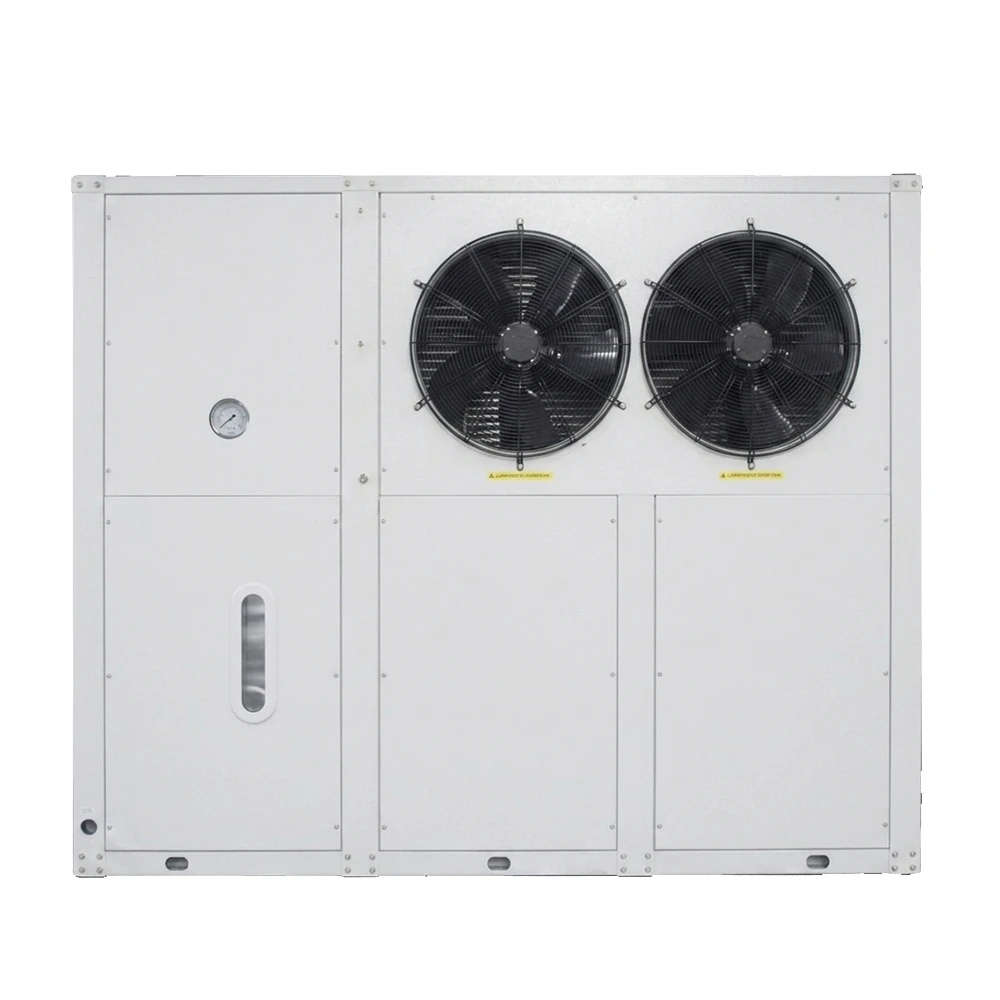
Where no water-side waste heat exists but steam is still needed — retrofits with only oven exhaust available.

Adhesive curing, low-temperature module drying and component bake-out below 85 °C. Not for electrode ovens — those need 120 °C+.
Ten years of heat, priced on your site
Energy price alone does not decide a project — capital, load and running hours do. Set seven numbers and the panel prices both options over ten years, including the capital the boiler option does not need. Screening tool, not a quotation. Every monetary figure stays in whatever currency you enter.
All monetary outputs are in whatever currency you enter. This is a screening estimate, not a quotation — the exclusions are listed directly below.
Included: the installed cost of the heat pump system and ten years of energy cost for both options at constant prices. Excluded, and all of it favours the heat pump: avoided boiler servicing and burner maintenance, NOx permit and stack testing, fuel storage and handling, carbon price or Scope 1 reporting cost, any grant or tax credit, and the value of the chilled water produced when the unit runs as a heat recovery chiller. Excluded, and this works against it: electrical capacity upgrades, structural or footprint works, and production downtime during tie-in. The three formulas are the same ones used on our textile and food pages: boiler heat cost = fuel ÷ efficiency, heat pump heat cost = electricity ÷ COP, break-even COP = electricity ÷ boiler heat cost.
Where a heat pump stops — and what to do instead
An application page without limits is a brochure. These are the four boundaries we hit in every new energy and electronics project, stated before you ask.
| Boundary | Why | Correct solution |
|---|---|---|
| Diffusion, oxidation, LPCVD, PECVD, epitaxy | 800–1,200 °C process temperatures — two orders of magnitude beyond any heat pump | Electric furnaces and RF heating; heat pump serves only the utility loop around them |
| Direct steam injection into process chemistry | Would introduce contaminants into SPM, SC-1 or UPW; defeats the entire purity chain | Never. Isolated secondary loop with double-wall exchanger only |
| Flammable solvent exhaust (NMP) | Standard units are not Ex-rated; a spark in the exhaust path is unacceptable | ATEX-rated equipment plus LEL monitoring, or an indirect water loop |
| Ovens needing >150 °C at high velocity | Above 150 °C the cascade loses its advantage; some high-speed lines need 160–180 °C air | Hybrid: heat pump to 150 °C, electric trim heater for the last 10–30 K |
| Processes with very low annual hours | Capital recovery depends on running hours; pilot lines and R&D fabs rarely justify it | Start with the utility loop (hot water/UPW) and expand as utilisation rises |
Standards and compliance
Equipment entering a battery plant or a fab is audited against a specific set of rules. These are the ones that come up in every project review.
Semiconductor environment
SEMI S2 environmental, health and safety for production equipment; SEMI F47 voltage-sag ride-through; SEMI F57 high-purity polymer piping where PFA is used; ISO 14644-1 cleanroom classification for the installation envelope; NFPA 70 / UL 508A for control panels.
Battery plant & solvent zones
ATEX / IECEx for NMP-bearing exhaust and solvent areas; IATF 16949 quality system expectations from automotive customers; GB 51377 lithium battery plant design code for Chinese projects; EN 378 / F-Gas 517/2014 for refrigerant selection and leak management.
What we need to size your system
No site visit is needed for a first-pass answer. Five numbers get you an indicative design, a COP range and a payback estimate.
Process temperature levels
Supply and return temperature for each loop — for example "oven supply 125 °C, return 95 °C" or "bath 80 °C, return 70 °C".
Heat load and load profile
Peak kW plus annual operating hours, and whether the load is continuous (dry room, UPW) or batch (vacuum bake, SPM).
Available waste heat
Source type, temperature and flow: oven exhaust at 70–105 °C, chiller condenser water at 30–40 °C, wet-bench effluent at 25–40 °C.
Current cost of heat
Fuel type, price per unit, boiler efficiency, and the electricity tariff including demand charges and time-of-use structure.
Site constraints
Available footprint (roof, sub-fab, utility yard), noise limits, redundancy requirement, and whether the area is classified.
Q (kW) ≈ 0.335 × V (m³/h) × ΔT (K) / 1000
Example: 20,000 m³/h of oven exhaust cooled from 95 °C to 45 °C → 0.335 × 20,000 × 50 / 1000 ≈ 335 kW of recovered heat, before the compressor lift is added.
FAQ
Can a heat pump really supply 130 °C air for battery electrode drying?
What dew point can you hold in a lithium battery dry room?
Does the heat pump touch the chemicals or the ultrapure water?
What about the 800–1200 °C furnace steps in a wafer fab?
Is NMP-laden exhaust safe for a heat pump?
How fast does a project pay back?
Send us three numbers. Get a real answer.
Process temperature, annual heat demand, and what you pay for heat today. That is enough for an indicative COP, a recommended series and a payback range — with the boundaries stated, not hidden.
Sources and basis
- Coating drying windows (cathode 85–130 °C, anode 75–110 °C, exhaust 70–105 °C): lithium battery plant environmental impact assessments and coating-line specifications published 2023–2025.
- NMP properties (boiling point 202 °C, latent heat ≈540 kJ/kg): solvent property data and NMP recovery system literature.
- Dry-room conditions (−40 °C dew point, 20–25 °C, <1% RH) and regeneration temperatures (120–140 °C conventional, 70–90 °C mid-temperature wheels): desiccant dehumidifier specifications and published dry-room system data; mid-temperature regeneration performance reported by wheel manufacturers.
- SPM 120–150 °C, SC-1 65–80 °C, SC-2 65–85 °C, hot DI 60–70 °C: wet-bench process standards and RCA clean literature (SIMIT, patent filings, university fab operating standards).
- Cleanroom 20–25 °C, ±0.5–1 °C control: semiconductor HVAC design references.
- COP ranges: published cascade and water-source heat pump system data for 120–150 °C and 80–95 °C duty; treated as indicative, not guaranteed.